The right shelter can protect you from foul weather without weighing you down when you run. Photo: iRunFar/Eszter Horanyi
From dawn to dusk, you move quickly through the landscape with your home stuffed into the pack on your back — what a concept. But that’s exactly what makes fastpacking so enticing. If you want to turn big runs into bigger runs by sleeping a little bit on the way, you’ll want to take a look at our roundup of the best ultralight tents for fastpacking.
Countless tent, tarp, and bivvy options are available to fit different needs and budgets. In recent years, single-wall tents have improved to the point that they are nearly as good as double-wall tents for preventing condensation and are almost as light as simple tarps. For this guide, our team of fastpackers, runners, and ultralight backpackers tested an array of one- and two-person shelters — both tents and tarps — all over the American West to find the best options for various needs.
Unsurprisingly, no single shelter was top-ranked by all of our testers, but nine of them stood out as the best ultralight tents by being light, stormworthy, versatile, and durable enough to suit a variety of fastpackers.
Our team loved the Zpacks Duplex Lite Tent for a one- and two-person shelter, but we realize its price can be prohibitive for many. When it came to a one-person shelter, we also turned to the SlingFin SplitWing Shelter Bundle, and we found the Paria Sanctuary SilTarp to be an outstanding budget option.
For more background information, see our buying advice, testing methodology, and frequently asked questions below the picks. Also, check out our best fastpacking pack, best ultralight sleeping bag, and best ultralight sleeping pad guides!
Best Ultralight Tents for Fastpacking
- Best Overall Ultralight Tent: Zpacks Duplex Lite Tent
- Best Ultralight One-Person Tent: SlingFin SplitWing Shelter Bundle
- Best Ultralight One-Person Tent — Runner-Up: Yama Mountain Gear 1P Cirriform Tarp
- Best Ultralight Two-Person Tent: Mountain Laurel Designs SoloMid XL
- Best Ultralight Two-Person Tent — Runner-Up: Durston X-Mid 2
- Best Budget Ultralight Tent: Paria Sanctuary SilTarp
- Lightest Ultralight Tent: Zpacks Hexamid Pocket Tarp
- Best Dedicated-Pole Tent: Big Agnes Fly Creek UL2
- Best Ultralight Bivvy: SOL Escape Bivvy With Hood

iRunFar’s Meghan Hicks watches a sunrise during a fall fastpacking trip in Utah. Photo: iRunFar/Eszter Horanyi
Best Overall Ultralight Tent: Zpacks Duplex Lite Tent ($700)
 Pros:
Pros:
- Incredibly light
- Can fit two
Cons:
- Expensive
- Can be finicky to set up
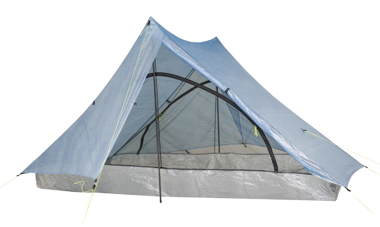
When it comes to a single tent that can seemingly do everything, the Zpacks Duplex Lite Tent is hard to compete with. This tent is one of the lightest and most versatile on this list, weighing just 15.9 ounces (450 grams) with its stuff sack and comfortably fitting two people. It’s also the most expensive. But for the price, you get a fully enclosed tent that can work in nearly any fastpacking situation and weighs less than many single-person tents and tarps.
The upper part of the tent is made of thin Dyneema Composite Fabric (DCF), while the floor features a slightly thicker and more durable DCF. The material is completely waterproof, so you don’t have to worry about it soaking through during extended rainstorms. While DCF isn’t the most compressible fabric, this tent packs down small enough to fit into a fastpack.
Six very thin guylines keep the theme of making everything as light as possible, but we were never worried they would snap, even during intense wind storms. The guylines are impressively long, making it easy to get stakes in the ground in rocky areas without many options.
This tent pitches with two 122-centimeter trekking poles. This means that both 120- and 125-centimeter poles will work easily. You can also get a pole extender or use adjustable poles. You can check out various options in our Best Trekking Poles guide.
We used this tent for solo and two-person trips. Its 40-inch footprint width made it spacious enough for a one-person shelter and wide enough to fit two without too much struggle. The two doors and symmetrical design of the tent make it easy to get up in the middle of the night without having to crawl over a tentmate, and it is tall enough to sit up in.
The footprint is 90 inches long, which accommodates taller people and gives shorter people plenty of space to move around. The bathtub floor extends nearly seven inches up on each side, making it nearly impossible for moisture to enter the tent from the ground.
Although the storm doors aren’t zippered, they overlap each other enough that when properly pitched, they don’t let precipitation in. You can secure the two doors on the guyline, and a single hook and toggle system keeps everything tight. To increase airflow through the tent, you can easily leave any combination of the door flaps open.
We were impressed with how little condensation we experienced when using this single-walled tent. Although we’ve historically woken up to moisture inside single-wall tents, this design seems to provide plenty of ventilation.
This isn’t the most straightforward tent to set up, but with practice, it goes up nearly as easily as others in this guide. It can be a little fiddly if you want a completely straight and even pitch.
We fully acknowledge that this tent’s price is high, but we feel it’s worth the investment for those who frequently fastpack and want to lighten their gear without sacrificing shelter functionality. A properly cared-for tent can last a very long time.
Read more about the shelter in our Zpacks Duplex Lite Tent review.
Type: Fully enclosed single-wall tent | Advertised Weight: 14.9 ounces (423 grams) | Actual Weight: 15.9 ounces (450 grams) | Packed Size: 4.5 x 11 inches ( 11.5 x 28 centimeters)
Shop the Zpacks Duplex Lite TentBest Ultralight One-Person Tent: SlingFin SplitWing Shelter Bundle ($400)
 Pros:
Pros:
- Light
- High-quality silnylon
Cons:
- Very small for two
- Short unadjustable guylines
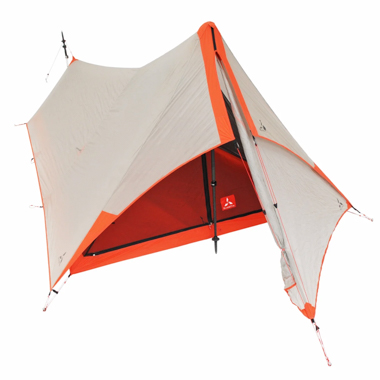
The SlingFin SplitWing Shelter Bundle is a modern take on the traditional A-frame tarp, which you pitch with two trekking poles. It’s a modular shelter that you can pitch tarp-only, or with an inner to make it a complete tent. Two people will fit in the internal mesh body if you don’t mind smashing together like sardines, but it’s definitely more comfortable as a one-person tent.
The tarp’s opening has two small wings that deflect rain and snow. We were surprised by how well the wings worked in a backyard rain test. The inner tent remained completely dry during three days of almost constant rain.
This was primarily vertical rain, though. In extremely windy conditions, you might want to add the vestibule beak to the tarp. The beak is a small triangle of fabric that attaches to the trekking pole handle and clips on either side of the doorway. It creates a vestibule and substantially increases the shelter’s stormworthiness.
The guylines on this ultralight tent are absurdly short, with only about three inches of actual adjustability. They make finding a decent place for a stake on rocky terrain difficult. We recommend replacing these guylines with longer ones — at least for the corners — so you can pitch this tarp on variable surfaces.
As a simple tarp, this shelter only weighs nine ounces. It pitches taut and low to the ground, and resists rain and wind quite well. This tarp’s silnylon was far more resistant to water absorption and sagging than any other nylon, except for the Mountain Laurel Designs SoloMid XL — reviewed below — which performed similarly well. We also appreciated that the tarp didn’t have any zippers, making it ideal for desert use where sand can quickly destroy zippers.
Overall, the SlingFin SplitWing Shelter Bundle is a high-quality, ultralight tent that needs a few tweaks, including longer guylines, to improve it substantially. We’d also probably err on calling it more of a one-person than a two-person shelter unless you’re close with your tent partner. For two, it’s just barely a step up from a bivvy. That said, for two people, it is a very light option.
Type: Double-wall catenary-cut tent | Advertised Weight: 21 ounces for the complete bundle (595 grams) | Actual Weight: 9 ounces (256 grams) tarp only, 11.5 ounces (326 grams) inner only, 2.3 ounces (65 grams) beak only, 22.8 ounces (648 grams) complete bundle before stakes | Packed Size: 4 x 7 inches (10.2 x 17.8 centimeters) tarp only, 5 x 11 inches (12.7 x 28 centimeters) complete bundle
Shop the SlingFin SplitWing Shelter BundleBest Ultralight One-Person Tent — Runner-Up: Yama Mountain Gear 1P Cirriform Tarp ($185)
Pros:
- Very light
- Low profile, good in wind
- Long guylines make pitching in variable terrain easy
- Fabric doesn’t sag when wet
Cons:
- Low headroom
The Yama Mountain Gear 1P Cirriform Tarp is the most refined take on the traditional A-frame, two-trekking-pole-shaped tarp we have ever seen. It’s constructed from high-quality recycled silpoly, pitches taut and low to the ground, and looks nice to boot.
We appreciated the long guylines when setting up this ultralight tarp on a particularly rocky campsite in Colorado’s San Juans Mountains. They allowed us to search a large radius for soil into which we could drive stakes. Shorter guylines, like those on the SlingFin SplitWing, made pitching more difficult on the rocky terrain.
Since fastpackers often don’t know where they’ll end up for the night, having a tarp with long guylines to set up in various situations, including on sand, slickrock, snow, or tundra, is nice. As a bonus, you can pitch this tarp using fixed-length poles.
This shelter’s catenary curves give it an aesthetically appealing shape, making it one of the most visually appealing shelters in the entire group. These curves also make for a tight pitch. Because this tarp pitches super taut and low to the ground, it performs superbly in the wind — assuming you’ve got it well-staked.
In a backyard rain test, the silpoly fabric on this tarp absorbed less water and sagged less than other shelters constructed from silnylon or sil/PU fabrics. We left it out for three days in a near-constant deluge, and it didn’t droop or sag in any observable way.
Yama offers options for sealing the seams. For an extra $45, they will seal them for you, or you can do it yourself.
This tarp weighs a mere 13.1 ounces and packs smaller than your rain jacket. We also appreciate that it sets up the same way every single time, because at the end of a 30-mile day, you may not want to think about how you will pitch your flat tarp. We recommend pairing this tarp with a bivvy, such as the SOL Escape Bivvy With Hood or one of Yama’s bug bivvies, to make a roughly 24-ounce shelter, including stakes.
Type: Shaped tarp | Advertised Weight: 12.8 ounces (363 grams) | Actual Weight: 13.1 ounces (371 grams) | Packed Size: 3 x 6 inches (7.6 x 15.2 centimeters)
Shop the Yama Mountain Gear 1P Cirriform TarpBest Ultralight Two-Person Tent — Runner-Up: Mountain Laurel Designs SoloMid XL ($275-$535)
Pros:
- Versatile and can be used as a tarp or tent
- Durable materials
- Large #8 zipper
- Double-wall helps with condensation
- Roomy and sleeps one or two
Cons:
- Expensive
- On the heavier side with inner
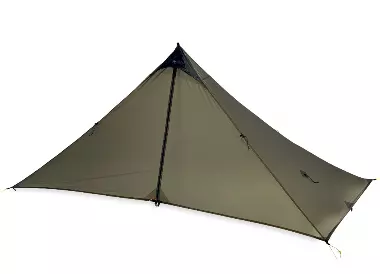
The Mountain Laurel Designs SoloMid XL is a favorite one- or two-person, double-wall fastpacking shelter because it is light, easy to pitch, super-durable, stormworthy, and supremely versatile. This tent is designed for one person, but with a 4.5-foot width, it accommodates partnered fastpacking trips when used in tarp-only fashion. One of our testers spent more than 120 nights in it without issue.
The tarp weighs 16 ounces, and with sealed seams and long guylines, it’s still only 18.2 ounces. With the inner, this shelter becomes a fully enclosed tent weighing 30.1 ounces without stakes. It pitches with four stakes, but we recommend nine for a sturdy pitch. With nine stakes, the whole package weighs just over two pounds. There is no two-person inner for this tent. If you like the design but want double-wall protection for two people, check out MLD’s other tents, the Mountain Laurel Designs Duomid and Mountain Laurel Designs Duomid XL.
The rectangular base of this tent allows the fly to be pitched easily using only four stakes. This will enable you to escape the rain before setting up your sleeping area, which is impossible with most freestanding tents that have a dedicated pole set.
To pitch the tent quickly, stake out the four corners, ensuring each one is at a right angle to its neighbors. Then, insert the handle of your trekking pole into the apex of the tent and extend the pole. This whole process can take as little as 60 seconds, no joke. This matters when those afternoon thunderstorms roll in, and you need to get out of the rain ASAP.
The rectangular shape also tensions the perimeter, making this shelter very stable in the wind. Once situated and warm, you can add more stakes and improve the pitch if needed.
While not as light as the Zpacks Hexamid Pocket Tarp — the lightest shelter on our list (below) — this tent provides all-sided protection and enough space for two people when not using the inner, all at a very reasonable weight. Unlike many flat and shaped tarps on this list, this tent can pitch to the ground without sacrificing internal volume.
For such a spacious shelter, this tent packs down very small: about 4 x 14 inches for the tarp, inner, and nine stakes. However, it will squish down much smaller than that in your pack.
We tested the previous version of this tent, which was constructed from a 20-denier silnylon. The new version is made of 20-denier silpoly. The silnylon version sagged less when wet and seemed to remain waterproof longer than many other silicone- and polyurethane (PU)-coated sil/PU fabrics we tested, so we suspect the new fabric will also perform well in these regards, but we would like to get our hands on it to make sure. One note for desert rats: the high-grade silicone coating tends to attract sand, so be aware that the shelter will need substantial cleaning after a trip through canyon country. It’s also available in a lighter DCF version.
The burly #8 zipper is the largest and most durable zipper of all the tents in this guide, which we appreciated, given that zippers are often the failure point for tents.
The only real bummer about this shelter is it’s pricey — $275 for the tarp alone, $455 with a silnylon inner, and $535 with a DCF inner.
To learn more, read our Mountain Laurel Designs SoloMid XL review.
Type: Double-wall pyramid tent | Advertised Weight: 16 ounces (454 grams) tarp only without seam sealing and guylines, 11 ounces (312 grams) inner only, 27 ounces (765 grams) complete tent before seam sealing and guylines | Actual Weight: 18.2 ounces (516 grams) tarp only with seam sealing with guylines, 11.9 ounces (339 grams) inner only, 30.1 ounces (855 grams) complete tent | Packed Size: 4 x 14 inches (10 x 35 centimeters) complete tent
Shop the Mountain Laurel Designs SoloMid XLBest Ultralight Two-Person Tent — Runner-Up: Durston X-Mid 2 ($320)
Pros:
- Versatile and can be used as a tarp or tent
- Relatively inexpensive
- Roomy and comfortably fits two
- Can sleep up to three without inner
- Sil/PE polyester doesn’t sag when wet
Cons:
- Short corner guylines need replacement with longer ones
- On the heavier side for fastpacking
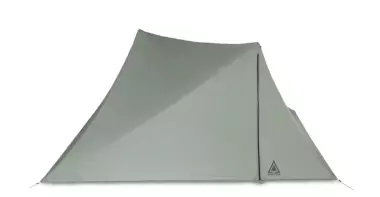
The Durston X-Mid 2 was one of the most hyped products in the ultralight backpacking world when it first came out, and it continues to live up to, and maybe even surpass, that hype. This double-walled, modular, two-person, two-door, trekking pole-supported tent is huge, stormworthy, comfortable, inexpensive, and durable.
One of our testers has used this ultralight tent as his primary two-person backpacking, packrafting, and fastpacking shelter for more than four years and has nothing but good things to say about it.
One of his favorite attributes is its rectangular base. You can pitch this tent on about any terrain with only four stakes. The rectangular base doesn’t just make pitching easy — it also tensions the entire perimeter, creating an incredibly sturdy structure.
Once pitched with four stakes, you can throw your pack inside to get it out of the rain before adding additional stakes or setting up your sleeping area. And speaking of rain, because this tent employs a sil/PE polyester, it doesn’t stretch or sag when wet.
At 31 ounces before stakes, the weight of this tent is comparable to the Big Agnes Fly Creek UL2 below, but it provides much more space for the weight. The X-Mid 2 has two doors, each with a huge vestibule, so each person can organize and manage their own gear without bothering the other. Both people can sit up simultaneously without hitting their heads on the tent.
Plus, because this is a double-walled modular tent, you don’t have to take the inner if bugs aren’t an issue. The fly alone is only 18.3 ounces and comfortably sleeps up to three people. It also serves as a party tent for up to seven, as we discovered one snowy afternoon in the San Juan Mountains of Colorado when the weather turned unpleasant.
We should note that we have been using the first iteration of this tent, and it has been updated with a slightly smaller footprint, a lower weight, and other nice touches. We expect all of our observations to apply to the latest version.
Type: Two-pole, double-wall pyramid tent | Advertised Weight (updated version): 31 ounces (879 grams) entire tent, 18.3 ounces (519 grams) fly only | Actual Weight (older version): 37.4 ounces (1,060 grams) entire tent, 22.2 ounces (629 grams) fly only | Packed Size: 6.5 x 12 inches (17 x 30 centimeters)
Shop the Durston X-Mid 2Best Budget Ultralight Tent: Paria Sanctuary SilTarp ($85)
Pros:
- Versatile and can be pitched in many configurations
- Durable materials
- Inexpensive
Cons:
- Fabric absorbs water
- Fabric coating seems less durable than some others
- Heavy
We initially wanted to test the Paria Sanctuary SilTarp because it was the least expensive flat tarp that appeared to include quality materials. We figured its price could warrant its inclusion even if it wasn’t the highest-performing shelter on the list, and we weren’t wrong.
This ultralight tarp features 30-denier sil/PU nylon, which makes it durable without being excessively heavy. With all guylines attached but without stakes, our 8 x 10-foot tarp weighs 19.5 ounces. While this is more than many other tarps we tested, the price was significantly lower.
Some extra weight comes from the tarp being a little overbuilt. There are 16 ¾-inch webbing loops around the perimeter, and although these loops make it easier to pitch in awkward situations, they do add to the weight.
This shelter is large enough, at 8 x 10 feet, to comfortably fit two adults. It pitches with two trekking poles of any length, but you can also set it up in other ways. This tarp could be a good choice for fastpacking trips through piñon and juniper woodlands, where you can often string it between trees, creating a comfortable and sheltered campsite for waiting out desert monsoons.
Type: Flat tarp | Advertised Weight: 15.5 ounces (440 grams) | Actual Weight: 19.5 ounces (553 grams) | Packed Size: 4 x 10 inches (10 x 25 centimeters)
Shop the Paria Sanctuary SilTarpLightest Ultralight Tent: Zpacks Hexamid Pocket Tarp ($400)
 Pros:
Pros:
- Very light
- No zippers make it great for desert use
Cons:
- Expensive
- Very small
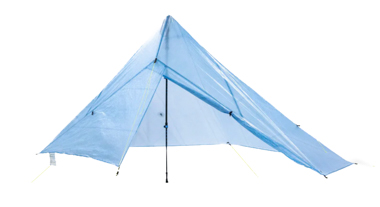
At 6.1 ounces, the Zpacks Hexamid Pocket Tarp is the lightest fastpacking shelter on our list. While not ideal for a trip where you know you’ll be frequently and heavily stormed on, it has a place for fastpacking in arid environments. Because of its low weight, it’s an excellent option for trips where you anticipate cowboy camping 90% of the time but want to carry a shelter in case of weather.
One of our testers uses it as his primary fastpacking shelter in the Colorado Plateau region, where rainfall is infrequent, and most storms are short-lived when they do occur. This tarp is an excellent option for people wanting the lightest shelter possible in environments where precipitation is unlikely.
We pair this shelter with the SOL Escape Bivvy With Hood, which we review below, to make it even more versatile. This way, we can cowboy camp most nights in the bivvy, only setting up the tarp when there’s a chance of precipitation.
Our biggest issue with this ultralight tarp is its length. Zpacks says it’s 107 inches long, which is only true of the front edge of the tarp, while the back edge is 94 inches. This starts to feel small when you’re waiting out an all-night storm.
One of our taller testers found himself tucking into a ball to keep the foot end of his sleeping bag dry. Shorter people should have no issue with the length of this shelter. Without a catenary cut, the tarp also doesn’t pitch tight, and our testers found that it was loud enough in the wind to keep him up.
Although $380 is a lot of money for a floorless tarp with no bug protection, it may be worth it for fastpackers who prioritize a light pack. If you like the feathery weight of the Zpacks Hexamid Pocket Tarp but want the security of a fully enclosed tent, consider the Zpacks Plex Solo Tent.
Type: Pyramid tarp | Advertised Weight: 6.1 ounces (173 grams) | Actual Weight: 5.3 ounces (151 grams) | Packed Size: 3.5 x 6 inches (8.9 x 15.2 centimeters)
Shop the Zpacks Hexamid Pocket TarpBest Dedicated-Pole Tent: Big Agnes Fly Creek UL2 ($450)
Pros:
- Major manufacturer
- Good option for people who don’t use trekking poles
- Reasonable price
Cons:
- Small for two, poor weight-to-volume ratio
- Bulky to pack
- Short, unadjustable (but replaceable) guylines
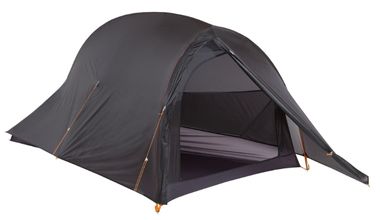
The Big Agnes Fly Creek UL2 is the latest iteration of a long-standing tent in the Big Agnes lineup. It’s a tried-and-true shelter, and one of our testers reported that her seven-year-old version had performed admirably during two multi-month New Zealand backpacking trips and many multiday fastpacking adventures in Colorado. It took over a decade of heavy use in high UV environments and the tent getting flattened in gale-force winds multiple times for the poles to finally crack and the material to start to fray.
The latest version of this tent is virtually the same as the previous version, except with the addition of Big Agnes’s new HyperBead Fabric Technology. Their cordial AI chatbot divulged that the Fly Creek’s HyperBead fabric is still a 15-denier nylon coated with silicone on the outside and PU on the inside, similar to the model we’ve been testing for several years. That said, this new fabric is supposedly 6% lighter, 25% more waterproof, and 65% stronger than their previous tent fabrics. It’s also made without intentionally added PFAS. While we expect our previous observations to apply to the new version, we hope to try it out in 2026 to make certain.
Since this tent has a dedicated pole set, it’s an excellent option for people who don’t use trekking poles, as well as those who want to leave their shelter set up while going out for day runs from a base camp. This shelter is comfortable for sleeping but cramped for two medium-sized adults when preparing for bed or getting dressed for the day. Once everyone settles, there’s enough room to sleep comfortably.
The single front entrance makes entering and exiting a sensitive procedure with a sleeping tent partner, and it’s worth taking middle-of-the-night bathroom breaks together, as the chances are that if one person is up, the other will be awake as well. All that said, the tent’s small size keeps the weight low enough — 3o ounces — for it to qualify as a fastpacking shelter.
We found this fabric to sag more in the rain than several of the high-grade silnylon and silpoly options in this guide. During our three-day backyard rain test, we observed this tent sagging more than its silnylon neighbors. We hope to run a similar test on the new HyperBead fabric when we get a chance.
For the most part, this tent’s major shortcoming — the light and saggy fabric — is completely acceptable and understandable. However, our testers weren’t accepting of the short, non-adjustable guylines. While tolerable on tundra or grassy meadows, they make pitching difficult on sandy or rocky surfaces, requiring a little more creativity.
The short, non-adjustable guylines also make it difficult to re-tension the tent in the rain when the material starts to sag. During an extended rain storm, we had to pull up stakes and pound them back about three inches from the original stake locations.
If this shelter had line tensioners and longer guylines, you could re-tension each one in a quick, 20-second lap around the tent. If you buy this tent, replace its guylines with longer ones and use a trucker’s hitch to re-tension the shelter during a storm.
Big Agnes makes a wide assortment of tents to suit various needs. Although they make tents even lighter than this one, the significantly higher price and reduced durability of these options drove us to choose this tent over them.
The Big Agnes Fly Creek UL2 made our list because it is light, relatively inexpensive, compact for a hub and pole tent, stormworthy enough, and durable enough to be used on fastpacking trips where weather uncertainty is ever-present.
Type: Semi-freestanding, dedicated pole tent | Advertised Weight: 30 ounces (879 grams) | Actual Weight (Previous Model): 31.9 ounces (904 grams) | Packed Size: 5 x 20 inches (12.7 x 50.8 centimeters)
Shop the Big Agnes Fly Creek UL2Best Ultralight Bivvy: SOL Escape Bivvy With Hood ($87)

Pros:
- Inexpensive
- Readily available
- Light
- Packs small
Cons:
- Condensation
- Limited use cases
The SOL Escape Bivvy With Hood is a specialized tool for fastpacking trips with a mild forecast or when a lot of sleep isn’t on the menu. It weighs 8.6 ounces and packs to about the size of a grapefruit.
This bivvy does not provide the same storm protection as a tarp or tent. It’s an excellent option for trips without much, or any, precipitation in the forecast, and where the goal is to cover a lot of ground, not necessarily to sleep very comfortably.
When we tuck into this bivvy at the end of a long day, we try to find sheltered campsites, such as below the bows of a giant fir tree or under an overhanging rock. Good campsite selection increases the bivvy’s stormworthiness. Some of us also like to use it with a tarp if we know the weather will be gnarly.
This bivvy is not as light as SOL’s zipperless version, but our testers found the latter difficult to wiggle in and out of, so we prefer this heavier zippered version. Even though this one is tight inside, a smaller or medium-sized person can fit a sleeping pad, sleeping bag, and themselves inside when needed.
One of our smaller testers can fit herself, her 40-degree sleeping bag, and a sleeping pad inside and stay comfortable as long as she sleeps on her back. This bivvy, partly due to the reflective liner material, adds significant warmth to a sleep system.
Condensation can occur inside the bivvy, especially around the feet. However, we often find it to be frozen condensation, which is not nearly as bad as a sopping wet sleeping bag. Our team has also found this bivvy quite durable, and some of us have had ours for years without any issues.
Finally, we can’t overstate the excellent price point. It is beyond reasonable for a bivvy that will last a long time and keep you safe on your most minimalist overnight trips.
Type: Bivvy | Advertised Weight: 8.5 ounces (241 grams) | Actual Weight: 8.6 ounces (243 grams) | Packed Size: 3.5 x 6.5 inches (8.9 x 16.5 centimeters)
Shop the SOL Escape Bivvy With Hood
There are endless options for shelters light enough for fastpacking. Photo: iRunFar/Eszter Horanyi
Comparing the Best Ultralight Tents for Fastpacking
| TENT | PRICE | TYPE | WEIGHT | PACKED SIZE |
| Zpacks Duplex Lite Tent | $700 | Single-wall fully enclosed | 15.9 ounces | 4.5 x 11 inches |
| SlingFin SplitWing Shelter Bundle | $400 | Double-wall catenary-cut | 9–21 ounces | 4 x 7 inches |
| Yama Mountain Gear 1P Cirriform Tarp | $185 | Shaped tarp | 13.1 ounces | 3 x 6 inches |
| Durston X-Mid 2 | $320 | Double-wall pyramid | 31 ounces | 6.5 x 12 inches |
| Mountain Laurel Designs SoloMid XL | $275-$455 | Single- or double-wall pyramid | 18.2–30.1 ounces | 4 x 14 inches |
| Paria Sanctuary SilTarp | $85 | Flat tarp | 19.5 ounces | 4 x 10 inches |
| Zpacks Hexamid Pocket Tarp | $500 | Pyramid tarp | 5.3 ounces | 3.5 x 6 inches |
| Big Agnes Fly Creek UL2 | $450 | Semi-freestanding tent | 31.9 ounces | 5 x 20 inches |
| SOL Escape Bivvy With Hood | $87 | Bivvy | 8.6 ounces | 3.5 x 6.5 inches |

iRunFar’s Meghan Hicks and Eszter Horanyi use the Zpacks Duplex Lite Tent on their Wind River High Route Traverse in Wyoming. Photo: iRunFar/Eszter Horanyi
Ultralight Tent and Tarp Fabric Glossary
Refer to this glossary for more information on a shelter’s fabric.
Siliconized nylon (silnylon): Nylon fabric coated on both sides with silicone.
- Low water absorption
- High tear strength
- Highly waterproof
Silicone-coated polyester (silpoly): Polyester fabric coated on both sides with silicone.
- Almost zero water absorption
- Highly waterproof
- Can include recycled polyester
Silicone and polyurethane-coated nylon (sil/PU nylon): Nylon fabric coated on the face with silicone and coated inside with polyurethane.
- Inexpensive
- Can be seam-taped
Silicone and polyester urethane-coated polyester (sil/PU poly): Polyester fabric coated on the face with silicone and coated inside with polyester urethane.
- Inexpensive
- Can be seam-taped
- Can include recycled polyester
Silicone and polyether urethane-coated polyester (sil/PE poly): Polyester fabric coated on the face with silicone and coated inside with polyether urethane.
- Can be seam-taped
- Doesn’t absorb water or wet out like PU fabrics
- Won’t become smelly over time like PU fabrics
Dyneema Composite Fabric (DCF): A non-woven fabric consisting of a lattice of ultra-high-molecular-weight-polyethylene (UHMWPE) fibers laminated between two polyester sheets.

Author Ben Kilbourne sleeps in the SlingFin SplitWing Shelter Bundle in the Wasatch Mountains of Utah. Photo: iRunFar/Ben Kilbourne
Buyer’s Guide: How to Choose an Ultralight Tent or Tarp for Fastpacking
When choosing the best ultralight tent for fastpacking, consider three main categories: freestanding shelters, non-freestanding shelters, and bivvies. Within the non-freestanding category are two main types of shelters: fully enclosed tents and tarps.
Some of the shelters in our list can be used as tarps or tents, which we’ll explain below. Our favorite overall shelter is the Zpacks Duplex Lite Tent, which is a fully enclosed, trekking pole-supported, single-wall tent.
Dedicated Pole-Set Shelters
Freestanding, dedicated pole-set shelters require no staking for setup, although you must stake them for use in inclement weather. These shelters utilize an included, dedicated pole set to make them freestanding. The Big Agnes Fly Creek UL2 is the closest thing we have to a freestanding shelter, but even it requires staking out the foot end to extend the fly fully.
These shelters are excellent options for fastpackers who don’t travel with trekking poles or for those who want to set up a basecamp that they leave during the day and want to have their trekking poles available for their day adventures from camp.
Trekking Pole-Supported Shelters
Most of the best ultralight tents on our list are non-freestanding, requiring trekking poles and stakes for setup. A trekking pole-supported shelter, such as the Mountain Laurel Designs SoloMid XL, is generally lighter and packs much smaller than a freestanding tent with a dedicated pole set.

The Zpacks Duplex Lite Tent pitches easily with a pair of 120- or 125-centimeter trekking poles. Photo: iRunFar/Eszter Horanyi
Tarp
A tarp is a floorless shelter, usually supported by trekking poles or strung between trees. The Zpacks Hexamid Pocket Tarp is the lightest shelter in this guide and packs up to the size of a rain jacket. While tarps were originally the primary choice for ultralight backpackers, there is now an array of fully enclosed tents that weigh just a little more than tarps and provide more protection.
Tarps can be paired with a bivvy, like the SOL Escape Bivvy With Hood, to provide even more protection from the elements. However, if you’re sleeping in a buggy area and want protection from mosquitoes, you’ll probably want a fully enclosed shelter.
Flat Tarps
Flat tarps are rectangular or square, and you can pitch them in many different configurations. They are super versatile and light, but mastering their setup requires some practice. The Paria Sanctuary SilTarp is an example of a flat tarp, and it has 16 webbing loops that you can use to set it up in various configurations.

Using a bivvy in conjunction with a tarp can provide you with extra protection from the elements. Photo: iRunFar/Eszter Horanyi
Shaped Tarps
A shaped tarp is constructed with a curved or catenary-cut ridgeline and edges to tighten the pitch. These tarps tend to flap less in the wind than flat tarps. The Yama Mountain Gear 1P Cirriform Tarp is an example of a shaped tarp, and we appreciate its aesthetics.
Tents
Tents are fully enclosed shelters consisting of a tarp or fly, bug netting, and a floor. They offer more protection from weather and bugs than ultralight tarps do. Tents can be either freestanding, like the Big Agnes Fly Creek UL2, or non-freestanding, like the SlingFin SplitWing Shelter Bundle.
Tents can also be single-wall or double-wall. For a long time, single-wall tents had condensation issues, but design technology has created modern options that perform nearly as well as their double-wall counterparts at a significantly lower weight.
Double-Wall Tents
Double-wall tents, like the Durston X-Mid 2, consist of two separate pieces: a fly or tarp and an inner tent with bug netting and a floor. You can also think about many double-wall tents as modular tents because either part of the tent, the fly or the inner, can be pitched separately.
Besides modularity, the main benefit of double-wall tents is their increased performance in bad weather when compared to other types of tarps or tents. The floor protects the sleeping area from wet ground, the bathtub walls protect the sleeping area from spindrift and splashing rain, and the mesh tent body protects the sleeping area from condensation.
As moisture accumulates inside the tarp and drips off, it lands on the mesh rather than your sleeping bag, rolling down the outside of the tent toward the ground. This helps keep your sleeping bag dry. It’s worth noting that you could experience condensation in certain conditions, such as when camping in a wet meadow under a clear sky, or when it’s dumping rain.
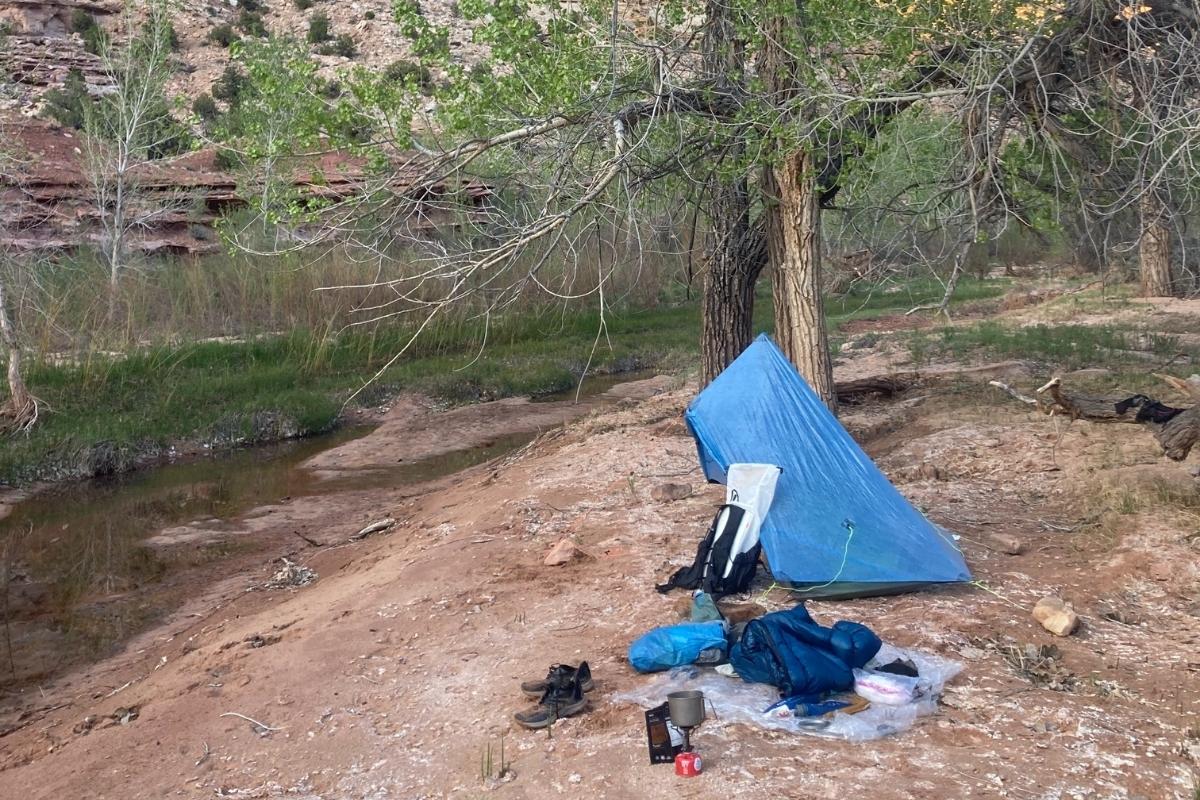
Testing the Zpacks Hexamid Pocket Tarp after a big day testing the Hyperlite Mountain Gear Aero 28 fastpack in Utah’s canyon country. Photo: iRunFar/Ben Kilbourne
Single-Wall Tents
Single-wall tents, sometimes called tarp tents, such as the Zpacks Duplex Lite Tent, are fully enclosed shelters that feature bug netting sewn between the fly and the floor. By skipping all the excess material that composes an inner tent, single-wall tents are significantly lighter than double-wall tents.
Single-wall tent designs can sometimes suffer from condensation issues, but recent advances in design technology have increased airflow and somewhat alleviated the problem.
Fabric
While the fabric on every one of the shelters on our list is different, they can fit into six categories: siliconized nylon (silnylon), silicone-coated polyester (silpoly), silicone- and polyurethane-coated nylon (sil/PU nylon), silicone- and polyurethane-coated polyester (sil/PE poly), silicone- and polyether urethane-coated polyester (sil/PU poly), and Dyneema composite fabric (DCF). You can read more about these materials in our tent fabrics glossary above.
The Mountain Laurel Designs SoloMid XL is an example of a tent constructed from silpoly. This 20-denier fabric is coated on both sides with silicone. It is a long-lasting, very waterproof fabric with high tear strength and low sag. The only downside of this fabric is that you cannot tape it, so the seams must be sealed by hand using Gear Aid Silnet Silicone Seam Sealer. Most manufacturers offer a seam-sealing service.
The nylon fabric on the Big Agnes Fly Creek UL2 is also silicone-coated, but only on the outside. The inside of the material has a polyurethane coating, allowing the manufacturer to tape the seams. The PU coating decreases the tear strength and increases the sag compared to a fully silicone-coated nylon. One benefit of PU is that it attracts less sand than fully silicone-coated nylons, making it a good choice for desert outings.

A dedicated pole tent is easy to set up on desert slickrock. Photo: iRunFar/Eszter Horanyi
While most ultralight tents and tarps have historically been made of nylon, the ultralight tent market has seen a resurgence in polyester over the last few years as clever designers push the envelope. Polyester doesn’t absorb water, so it won’t sag when wet and will not be as heavy in your pack as saturated nylon would be after a night of rain.
The Yama Mountain Gear 1P Cirriform Tarp is a polyester shelter coated with silicone on both sides. Its fabric also features recycled materials, which is less common with nylon.
The Durston X-Mid 2 features polyester with a silicone coating on the outside and a polyether urethane coating on the inside. In our experience, this sil/PE material doesn’t absorb water and has virtually zero sag.
Dyneema Composite Fabric, or DCF, is a non-woven fabric consisting of a lattice of ultra-high-molecular-weight polyethylene (UHMWPE) fibers laminated between two polyester sheets. The Zpacks Duplex Lite Tent and Zpacks Hexamid Pocket Tarp are the only tents on our list constructed from DCF.
DCF is lighter than the other fabrics on this list, has an astonishingly high tear strength, and doesn’t absorb water. There is some evidence showing that DCF doesn’t last quite as long as high-grade silnylons. DCF is also incredibly expensive, but many people feel that its low weight makes it worth the investment.

Meghan Hicks and Eszter Horanyi took tents out for testing in the Wind River Mountains of Wyoming during a stormy week. Photo: iRunFar/Eszter Horanyi
Denier
Denier is a rough estimate of the thickness of an individual thread in a fabric. Tents and tarps in this guide range from 10- to 30-denier fabrics. Higher-denier materials are generally stronger than lower-denier fabrics, and lower-denier fabrics are lighter.
The construction and coatings of fabric make a difference as well. The 10-denier silnylon on the SlingFin SplitWing Shelter Bundle, for example, absorbed less water and sagged less than the 10-denier sil/PU nylon found on the Gossamer Gear Twin Tarp, which did not make the list because of the relatively poor fabric performance. In other words, it’s useful to know the denier of a shelter fabric, but it doesn’t tell you everything.
Because DCF is a non-woven fabric, denier isn’t used to describe its thickness or weight.
Hydrostatic Head
The waterproofness of a fabric is measured using the hydrostatic head test. This test measures how much water pressure a material can handle before moisture seeps through. Fabrics in this buyer’s guide range between 1,500 millimeters for the Big Agnes Fly Creek UL2 and more than 5,000 millimeters for the Mountain Laurel Designs SoloMid XL. The higher the number, the more waterproof a fabric will be.
Guyline Length
Our preferred guyline length for most shelters’ corners is at least 12 inches, and up to 24 inches in canyon country. While line tensioners are ideal, not every shelter on our list has them, and that’s fine if the guylines are long enough to tie a trucker’s hitch to tension them. The six guylines on the Zpacks Duplex Lite Tent are long enough to set the tent up in challenging terrain, and they are easy to tighten.
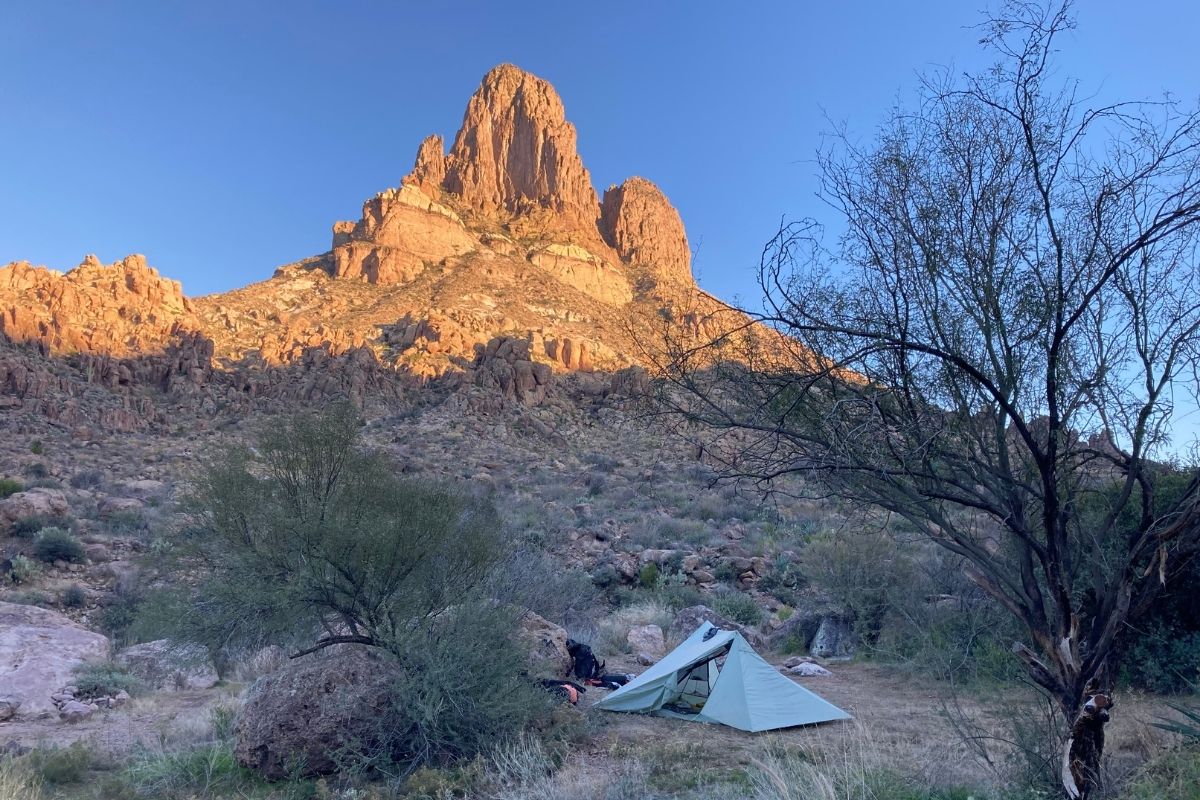
Our testers have found the Durston X-Mid 2 to be super reliable in places that tend to thrash gear, like the Superstition Mountains in Arizona. Photo: iRunFar/Ben Kilbourne
Why You Should Trust Us
The iRunFar team has been fastpacking for well over a decade, and we’ve watched the adventure niche grow. What started as two separate endeavors — ultralight backpacking and adventure running — have now merged into one: fastpacking. Because of the overlap in gear needs, fastpackers have used ultralight backpacking shelters since the sport’s inception.
When we initially created this guide, we considered over 50 shelters and tested 16 in Silverton, Colorado, the Uinta and Wasatch Mountains of northern Utah, and various locations throughout the Colorado Plateau. Some of the best ultralight tents and tarps on this list had been in our team members’ quivers for more than five years, while others were new to us all.
Different users with different needs tried each shelter to ensure we didn’t overlook any shelter’s blatant flaws or unexpected benefits. We tested the shelters by placing them outside during multiday rainstorms to test fabric performance, and we also slept in them in wind, rain, and snowstorms in the wild.
No single shelter performed flawlessly under all conditions — to no one’s surprise — but nine of them stood out as being light, stormworthy, versatile, and durable enough to suit a variety of fastpackers with differing needs.
Choosing the best ultralight tent will depend on personal preferences and needs. We evaluated the shelters based on their weight, space, ease of use, weather resistance, material sag, and wind performance to accurately assess their performance under various conditions. Of course, we also considered cost!
Our team continues to test new shelters, and we keep this guide updated when we find something worthy of inclusion.

The iRunFar team took refuge in the Durston X-Mid 2 to wait out a spring snowstorm and found it fit us all just fine. Photo: iRunFar/Meghan Hicks
Frequently Asked Questions About Ultralight Tents and Tarps for Fastpacking
What is fastpacking?
Fastpacking is essentially the combination of ultralight backpacking and adventure running. Want to utilize your entire weekend by linking two 30-mile runs with a night out under the stars? Fastpacking. Want to push yourself to do a 100-mile thru-hike in only three days? Fastpacking.
When fastpacking, you take the minimum equipment needed to spend the night safely in the wilderness and then hit the trail. Run a little, hike a little, stop to hone your amateur naturalist skills, and then run and hike again. With a pack in the 15-pound range, running often isn’t very realistic, especially when moving over rough terrain.
But if you can reduce your pack weight enough — and a lightweight shelter like the Mountain Laurel Designs SoloMid XL or the Zpacks Duplex Lite Tent can definitely help — you can have a bit of a pep in your step on the flats and when cruising downhill. The best ultralight tent will keep your pack light while also sheltering you from the elements.

Spring testing with the Zpacks Hexamid Pocket Tarp in Colorado means snow! Photo: iRunFar/Eszter Horanyi
Do I need a shelter for fastpacking?
We don’t recommend embarking on a fastpacking trip without a shelter, as we believe some protection from rain, sleet, or snow is mandatory for safety. At a minimum, carry a small pyramid tarp, such as the Zpacks Hexamid Pocket Tarp, or a bivvy, such as the SOL Escape Bivvy With Hood. These items are tiny and light and will help keep you safe if the weather turns nasty.
Do I need bug protection?
Well, sometimes. Most of the year — roughly August through April — bug protection is unnecessary on the Colorado Plateau, where many of our testers live and play. Early-season and late-season alpine zones are also typically free from bugs. For this reason, many of us here at iRunFar don’t use fully enclosed tents much of the time, opting instead for flat and catenary-cut tarps.
Of course, your local playground could be different. Depending on where you live, ticks, scorpions, sand flies, and mosquitoes can be nearly constant concerns, and the best ultralight tent for these situations will be a fully enclosed one, like the Zpacks Duplex Lite Tent. Concerned about bug potential on a trip to the Pacific Northwest, one of our testers ended up acquiring her first tent after years of using a tarp.
So, if you fastpack mostly through the tick-infested Appalachians or the mosquito-infested Wind River Mountains in July, bring a shelter with bug netting. Several tents on our list will protect you from insects. The Mountain Laurel Designs SoloMid XL (with inner), Durston X-Mid 2, SlingFin SplitWing Shelter Bundle, and Big Agnes Fly Creek UL2 will all shield you from biting and stinging insects.

Testing the Mountain Laurel Designs SoloMid XL on a chilly spring morning in Colorado. Photo: iRunFar/Eszter Horanyi
Do I need a ground sheet if my shelter doesn’t have a floor?
Shelters without floors, like the Paria Sanctuary SilTarp, are an excellent option for many fastpacking trips, but they don’t provide any protection from the ground. If you’re using an inflatable sleeping pad, a ground sheet can protect it from punctures while also keeping the rest of your gear out of the dirt and away from moisture.
How light should my shelter be for fastpacking?
As with every other item in your tiny fastpacking pack, the lighter, the better. A lighter shelter will reduce your overall pack weight, allowing you to move faster and easier on the trail, but you want to match it to the terrain and forecast. The Zpacks Hexamid Pocket Tarp is the lightest shelter in this guide, but it doesn’t offer as much weather protection as a double-walled tent.
Lighter weight can sometimes translate to lowered durability or decreased storm protection. Be sure to ask yourself if your shelter is “stupid light,” considering the weather conditions you could encounter on your fastpacking trip. Shelters are just one part of a fastpacking kit, and sometimes it’s worth carrying a more protective shelter, and cutting a bit of weight somewhere else.
The best ultralight tent will strike a balance between its weight, durability, and ability to protect you from the weather. For gram-counters who want a fully enclosed shelter, the Zpacks Duplex Lite Tent protects two people and weighs less than a pound.
If the weather forecast is good, you can consider taking just the SOL Escape Bivvy With Hood for cowboy camping or sleeping under the stars without a tarp. We often pair a bivvy with a tarp for extra protection.

The SOL Escape Bivvy With Hood provides plenty of protection and extra warmth for trips with precipitation-free weather forecasts. Photo: iRunFar/Eszter Horanyi
Are bivvies as good as tents? When would I use a bivvy?
Bivvies offer less weather protection than ultralight tarps or tents, but they have their place. Their primary appeals are their low weight and ease of use. When you stop for the night, just throw it on the ground, climb in, and sleep.
The primary downsides are their low comfort and susceptibility to condensation, which can result in a wet sleeping bag. Our testers like to take bivvies on trips when the forecast is non-threatening.
Because bivvies can be light, we also like to use them when sleep is a lower priority than moving fast through space. For these reasons, we chose the SOL Escape Bivvy With Hood for our list. It is light, inexpensive, and protects you from weather when needed. For a bivvy, it’s also quite breathable, and we found that we woke up with a wet sleeping bag less often than with other bivvy options. It’s a specialty tool, and most of us at iRunFar prefer tarps or tents for 95% of trips.
I don’t use trekking poles, but want a double-walled pyramid tent. What should I do?
You aren’t out of luck if you don’t use trekking poles but still want a double-walled trekking pole-supported tent. You can still experience the joys of a pyramid tent, such as the Mountain Laurel Designs SoloMid XL, by purchasing it with this carbon fiber pole, which will only add three ounces to the shelter, for a total weight of 33 ounces without stakes.
But why, you might ask, would anyone choose this pyramid over a dedicated-pole, semi-freestanding tent such as the Big Agnes Fly Creek UL2, which weighs only 30 ounces before stakes? The short answer is that most people wouldn’t. Dedicated-pole tents are simple and essentially foolproof.
However, the Mountain Laurel Designs SoloMid XL can be set up tarp-first in a downpour, keeping your sleeping area from getting wet. It’s also constructed from higher-quality silnylon, which is stronger and sags less in the rain than Big Agnes sil/PU nylon.
Ultimately, there’s no correct answer. Some people prefer trekking pole-supported pyramid tents, and some prefer dedicated-pole tents. Even if you don’t use trekking poles, you can use either type of tent.

The Mountain Laurel Designs SoloMid XL in Colorado. Photo: iRunFar/Eszter Horanyi
Is Dyneema Composite Fabric worth the money?
Dyneema Composite Fabric (DCF) is lighter and has better tear strength than the silnylons or silpolys found in this list. It also doesn’t absorb water, so you can shake much of it off before stuffing the shelter back into your pack. These are worthy attributes and will understandably push many to choose DCF shelters. That said, DCF is very expensive, so we only have two of these shelters on our list: the Zpacks Hexamid Pocket Tarp and the Zpacks Duplex Lite Tent.
We have also found that some DCF shelters thrash in the wind, while nylon or polyester shelters have some give to them. This means that the guylines on a DCF shelter will be under immense stress. Stakes on DCF shelters are thus more likely to pull out of the ground than stakes on nylon or polyester shelters. This strain can also cause DCF to deform over many years of use, especially around the hem and at the corners where stress is greatest. Eventually, getting a good pitch on an old, deformed DCF shelter becomes difficult.
Some of our testers have observed that zippers on DCF shelters don’t last as long as zippers on nylon or polyester shelters. This is most likely due to the inflexible nature of DCF, which strains the zipper slider. The high tension grinds sand into the metal slider, wearing it out quickly. Fortunately, it’s easy to replace zipper sliders.

While DCF tents are expensive, they’re an excellent option for rainy trips due to their waterproofness. Photo: iRunFar/Eszter Horanyi
What kind of trekking poles do I need for ultralight shelters?
Most non-freestanding shelters on this list use poles ranging from about 110 to 140 centimeters, with many shelters ideally using a 120- or 125-centimeter pole. It’s easiest to use adjustable three-piece or two-piece poles, as they’ll allow you to get a tight pitch, but you may also use fixed poles. You can learn more about options for trekking poles in our Best Trekking Poles guide.
If your trekking poles are too short for your preferred shelter, add these carbon pole jacks to reach the shelter’s ideal pole height. Some taller tents even come with jacks. You can also lash two fixed-length trekking poles together with a bit of paracord or two Voile Straps to achieve a taller pitch height.
Do I need a ground sheet if my shelter doesn’t have a floor?
Shelters without floors, such as the Zpacks Hexamid Pocket Tarp, can protect you from incoming weather but don’t protect you from the ground. A ground sheet can protect an inflatable sleeping pad from punctures and provide a dry surface to spread your gear if the ground is wet.
Call for Comments
- What’s your favorite ultralight tent or tarp for fastpacking?
- Have you ever fastpacked without a shelter?
- Do you prefer ultralight tarps, tents, or bivvies for fastpacking?