
The best running sunglasses will perform well and protect your eyes from the sun. Photo: iRunFar/Eszter Horanyi
While running sunglasses can be a polarizing accessory — bad pun alert! — the simple fact is that most of us use them at one time or another. The best running sunglasses can be the ultimate style accessory for some, while for others, they’re a necessary and sometimes expensive evil. For those of us who spend a lot of time outside in the sun, especially at high elevations, sunglasses protect our eyes from harmful UV rays and help reduce squinting. The best running sunglasses can reduce eye strain, improve contrast on the trail, and protect eyes from branches and other eye-level obstacles.
There are nearly limitless options for running sunglasses on the market, from expensive photochromatic ones that adjust their darkness based on ambient light to cheap ones you probably won’t feel too bad about if you scratch or misplace. This guide can help you sort through the various types of sunglasses available, ranging from photochromatic to polarized to those with interchangeable lenses.
To find the best sunglasses for running, our team tested a wide variety of sunglasses in various conditions, considering lens type, cost, and style for different face sizes. Utilizing the team’s feedback, we offer our suggestions for the best running sunglasses across different categories and price points, recognizing that some individuals prioritize top optics, while others simply seek a pair of affordable sunnies that can withstand daily use.
At the higher end of the optics and price spectrum, we loved the Zeal Boone, and our budget-friendly choice is the Knockaround Fast Lanes.
For more background information, check out our running sunglasses glossary, buying advice, testing methodology, and frequently asked questions below the picks.
Best Running Sunglasses
- Best Overall Sunglasses: Zeal Boone
- Best Blade Sunglasses: Smith Shift Split Mag
- Best Photochromatic Lens Sunglasses: Rudy Project Propulse
- Best Budget Photochromatic Sunglasses: Tifosi Moab
- Best Interchangeable Lens Sunglasses: Smith Motive
- Best Sunglasses for Small Faces: Method Seven Silverton Trail26
- Best Crossover Sunglasses: Roka Braker 2.0
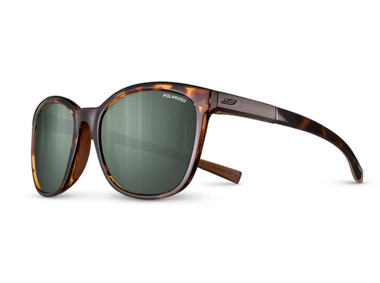
- Best Women’s Running Sunglasses:Julbo Spark
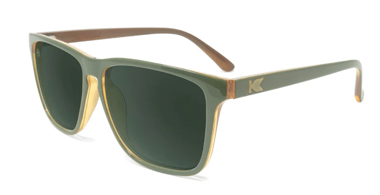
- Best Budget Running Sunglasses: Knockaround Fast Lanes
- Best Budget Sunglasses — Runners-Up: Tifosi Sanctum and Goodr OGs

We found that the Method Seven Silverton Trail26 (front) and Smith Motive (back) sunglasses had excellent optics and fit. Photo: iRunFar/Eszter Horanyi
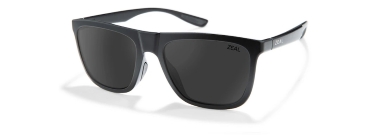
Best Overall Sunglasses: Zeal Boone ($160)
Pros:
- Frame feels solid and high-quality
- Stay in place during sweaty runs
Cons:
- Bigger frame is probably best suited to runners with bigger faces
The Zeal Boone sunglasses are not only one of our testing panel’s favorite running sunglasses overall, but they’re also the only ones in this guide with a clear environmental proclivity. The frame features Zeal’s Z-Resin, a material derived from castor plants, and the lens comes from plant-based Ellume. Additionally, Zeal partners with the National Forest Foundation and 1% for the Planet, with proceeds benefiting environmental projects.
Zeal’s pro-environment stance doesn’t compromise technical performance. The polarized lenses do an outstanding job of increasing contrast to make easier to see obstacles on the trail. Many of Zeal’s sunglasses carry a lifestyle aesthetic, but perhaps none better weave the technical performance needed for running and sport with as much off-trail style for post-run socializing or casual use as these. These really are a single pair of sunglasses that you can take anywhere.
Some of our testers with smaller faces found these frames and lenses somewhat large and overbearing, so they’re probably better suited for people with wider faces.
You can get these sunglasses with prescription lenses, a bonus for those who need to wear glasses or contacts to see the trail ahead.
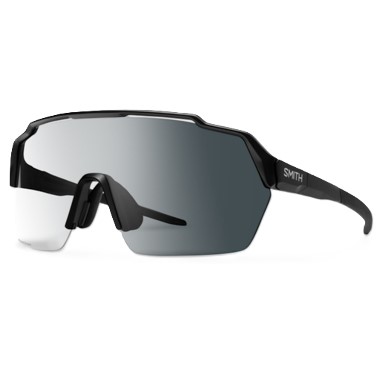
Shop the Zeal Boone SunglassesBest Blade Sunglasses: Smith Shift Split Mag ($307 – $337)
 Pros:
Pros:
- Great optics
- Quick lens transition time
- Comfortable
- Good coverage
Cons:
- Expensive
- Style may not appeal for casual use
When it comes to versatility, performance, and style, the Smith Shift Split Mag covers all the bases. While these sunglasses come with a variety of lens options, we recommend the Black + Chromapop Photochromatic Clear to Gray option. While expensive, this photochromatic lens makes these sunglasses suitable for nearly any condition. You can get less expensive non-photochromatic lenses that still provide the same outstanding optics.
Whether we like it or not, big-lens sunglasses are back on trend, and Smith does justice to the look with these. The slightly wrapped lens provides excellent peripheral vision, and there is no frame to obstruct your sideways field of vision. The Chromapop lens technology enhances contrast, making it easier to see details on the trail, especially in low-light conditions.
We were impressed with how quickly and smoothly these photochromatic lenses transitioned from full dark to full clear when we went from daylight into darkness. They’re ideal for early morning and late evening runs where the light changes rapidly. They also provide a lot of coverage, so they’re good for winter conditions when you want to protect your eyes from the weather and cold.
The lens has a smudge- and moisture-resistant coating, and we found it worked remarkably well for keeping the lenses free from fingerprints and condensation.
While the lenses are large, these sunglasses fit medium-sized faces best. If you’re looking for performance sunglasses that provide outstanding optics and great coverage, these ones have you covered. Literally.
Shop the Smith Shift Split Mag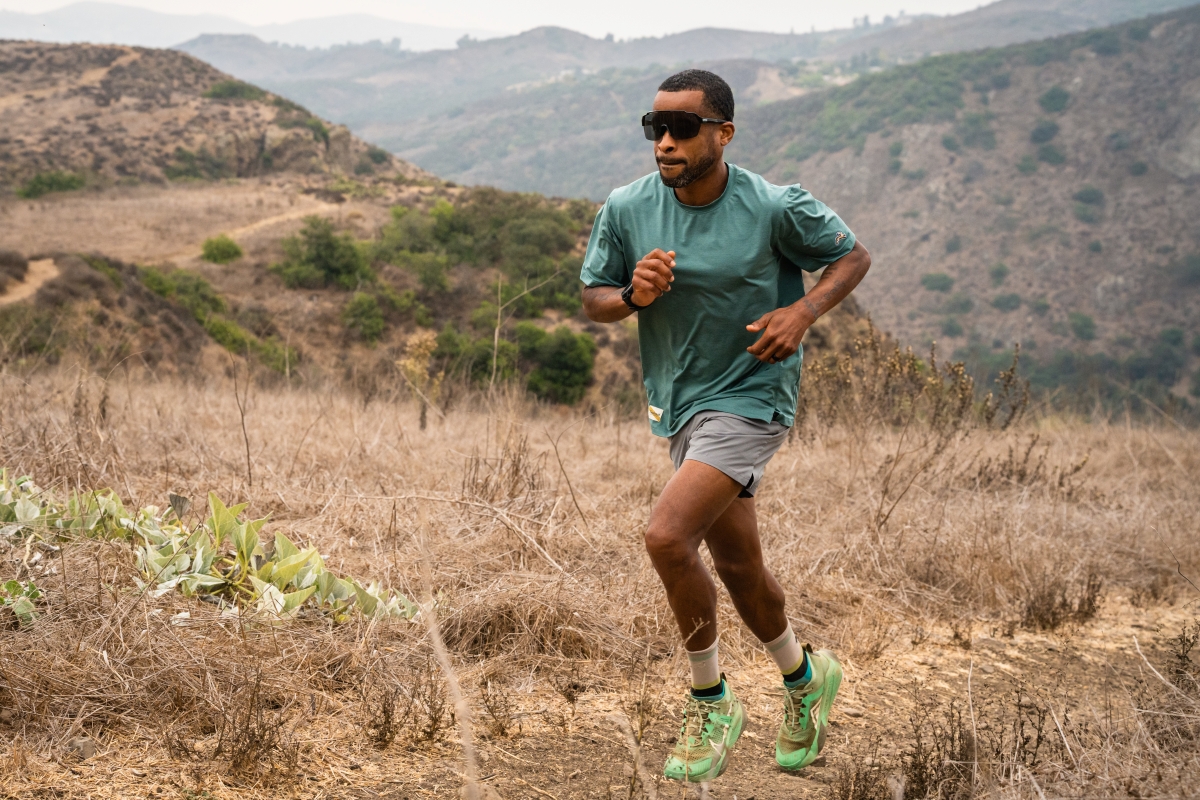
The photochromatic lens of the Smith Shift Split Mag made them perform well in all light conditions. Photo: iRunFar/Eszter Horanyi
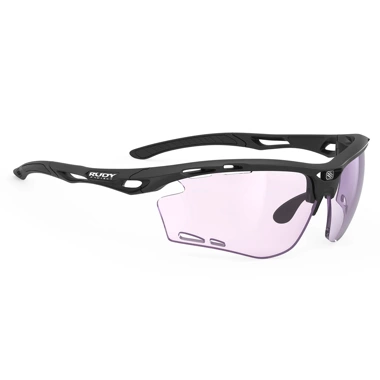
Best Photochromatic Lens Sunglasses: Rudy Project Propulse ($184 – $241)
 Pros:
Pros:
- Exceptional photochromic transition speed in changing light conditions
- Frame airflow channels prevent fog or moisture buildup
Cons:
- Style is very sporty, and they are unlikely to be used as casual sunglasses
After more than seven years of testing photochromic lenses for running, one of our testers calls the Rudy Project Propulse, with its ImpactX 2 photochromic lens, the best. We can say only good things about these glasses if you’re looking for pure performance. The style, on the other hand, may not be for everyone. These lenses have a distinct look and styling, and we recommend them for individuals who prioritize performance over appearance.
In the performance department, the Propulse lens quickly transitions from completely clear to a protective amber hue. The experience of the lens darkening is undetectable, and at its darkest, the ImpactX 2 lens provides a soft brown hue, which is excellent for picking out details on the trail.
The quality doesn’t end with the lens. These sunglasses fit securely, and their flexibility allows them to accommodate winter hats and various facial sizes. The frame cutouts effectively reduce weight, and both the frame and lens have a system of vents that reduce fogging and increase airflow around the eyes. The venting is particularly effective on long climbs in conditions when many other glasses would fog. While the high price might deter some from investing in the Propulse, Rudy Project includes a three-year warranty, which might make it easier to justify the spend.
Read more about these glasses in our full Rudy Project Propulse review.
Shop the Rudy Project Propulse Sunglasses
The photochromatic lenses of the Rudy Project Propulse are the best we’ve found. Photo: iRunFar/Eszter Horanyi
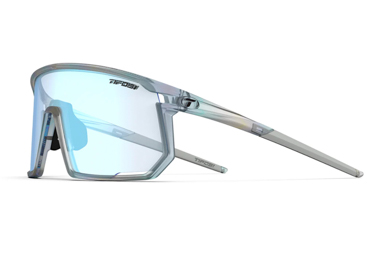
Best Budget Photochromatic Sunglasses: Tifosi Moab ($90)
 Pros:
Pros:
- Reasonable price
- Multiple lens options
- Good ventilation
Cons:
- Not dark enough for full sun
There are a lot of really expensive photochromatic sunglasses out there, and then there are the Tifosi Moab sunglasses, which deliver excellent performance for a fraction of the price. The shield-style lenses offer plenty of protection but are less overbearing than similarly styled sunglasses that tend to dwarf small or narrow faces. These still fit widely on narrow faces, but they don’t bounce around or shift. The nylon frame is light and has an adjustable nosepiece, making these sunglasses comfortable enough to wear for many hours. We used them on gravel rides for up to six hours and didn’t experience any tightness or discomfort.
Photochromatic lenses are ideal for changing light conditions, and we found that these polycarbonate scratch-resistant lenses transitioned smoothly. When it came to tint, we tested the Clarion Blue Fototec lenses and found that they weren’t quite dark enough for full sun but were great for all other light conditions.
The ventilation features of the Tifosi Moab helped it stand out from other similar options. The bottom vents allow airflow over the lens to prevent fogging, especially in high-humidity conditions, while the lens shape and coverage keep wind out of the eyes.
Our primary tester called these “one of the most underrated and lightest shield-style glasses out there,” and compared them in performance to the Oakley Sutro, Knockaround Campeones, and Smith Bobcat, noting that they are lighter and stay in place better than the Sutro and Campeones, and breathe better than the Bobcats.
These sunglasses come with a hardshell case, and different lens options are available for a very reasonable price.
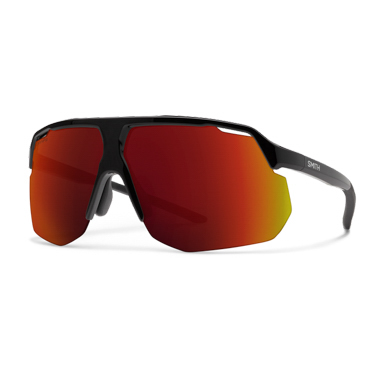
Shop the Tifosi MoabBest Interchangeable Lens Sunglasses: Smith Motive ($197)
 Pros:
Pros:
- Exceptional optics
- High level of coverage
Cons:
- The lens may feel overpowering for some
The era of big-framed sunglasses is back, and the Smith Motive provides a high level of coverage in an incredibly lightweight package. Weighing just 29 grams, you can almost forget you were wearing these sunglasses if it weren’t for the exceptional contrast the lenses provide. While these sunglasses are on the more expensive side of the range, their exceptional optics, coverage, and overall functionality make them a worthwhile investment for those who will take good care of them. If you’re someone who tends to drop, damage, or lose your sunnies, you may want to check out our budget options reviewed below.
These sunglasses offer various lens options, with each frame coming with both clear and tinted lenses. You can choose the lens combination that best suits your regular running conditions, whether you spend a lot of time in the high, bright alpine or in loamy, dark forests.
We found that the Chromapop lens increases contrast, allowing us to see details we wouldn’t have seen with our bare eyes. The wide lenses have good airflow, and we never experienced fogging issues while running, cycling, or skiing.
While the lenses are fairly large, we found that these sunglasses best fit medium-sized faces. However, they’re not necessarily the pair of sunglasses we’d wear in casual settings.
You can learn more about the specifications of these sunglasses in our in-depth Smith Motive review.
Shop the Smith Motive
The Smith Motive sunglasses come with a pair of interchangeable lenses. Photo: iRunFar/Eszter Horanyi
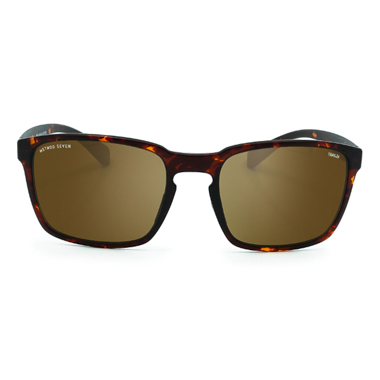
Best Running Sunglasses for Small Faces: Method Seven Silverton Trail26 ($175)
 Pros:
Pros:
- Exceptional optics, especially in lower-light conditions
- Good coverage
Cons:
- Tint may not be dark enough for long days in the sun
When it comes to outstanding optics, the Method Seven Silverton Trail26 sunglasses nail it with their tint and clarity. Designed to increase contrast and pick out obstacles on the trail, we found that the tint wasn’t quite dark enough for long days in the alpine when the sun was out, especially if we weren’t wearing a hat to provide some shade for our eyes. That said, for lower-light conditions, it’s hard to beat these optics.
Although the brand is fairly new to the trail running market, it developed its lens technology for use in indoor grow spaces and for pilots. With that experience, they created crystal-clear optics for these sunglasses, designed specifically to meet the needs of trail runners. They have a 26% visible-light transmission rating and filter specific wavelengths of light to increase contrast.
The lenses are partially polarized. You don’t get the full polarization effect, which can be extreme in some sunglasses, but get just enough to help bring out shadows in the trail, making it easier to negotiate roots and rocks.
They also excel under the protection of a hat, and iRunFar managing editor Eszter Horanyi chose to wear them while setting an unsupported FKT on the Nolan’s 14 line in Colorado, a route that spends most of its time above treeline. One of the most appealing features of these glasses is that at 23 grams, they’re incredibly light.
Our only gripe with these glasses is their fairly flexible frame that doesn’t grip securely when sitting on a hat. But if you’re looking for some of the best optics on the market, it’s hard to go wrong with these.
You can read more in our full Method Seven Silverton Trail26 sunglasses review.
Shop the Method Seven Silverton Trail26 sunglasses
The Method Seven Silverton Trail26 sunglasses perform best in lower-light conditions but are dark enough for full sun when used with a hat. Photo: iRunFar/Eszter Horanyi
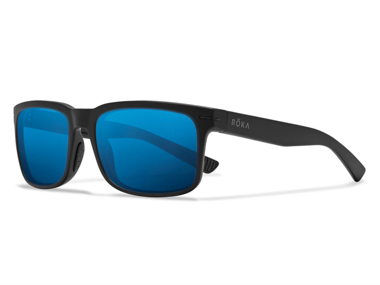
Best Crossover Sunglasses: Roka Braker 2.0 ($205)
 Pros:
Pros:
- Casual styling
- Fits small faces
- Excellent optics
Cons:
- Earpiece rubber can get caught in hair
- Expensive
With seemingly endless options on the market for large, blade-style, technical-looking sunglasses, the Roka Braker 2.0 offers an option for those with smaller faces who want a slightly more subdued look without compromising on lens quality, fit, or functionality. These sunglasses are equally comfortable out on the trail and in casual settings.
The pricetag on these glasses puts them firmly in the expensive category, but the optics are outstanding. There are several lens and frame combinations available, and all the lenses are polarized, reducing glare from water and other shiny surfaces while increasing contrast.
We tested the Glacier Mirror polarized lens option. We found that they provided a reasonably neutral reduction in light transmission without making the world look excessively rosy or blue, and were dark enough for full sun. We tested these sunglasses on high alpine routes in Colorado and in Utah’s sandstone country. Even though they are dark enough for full sun, the lenses don’t require immediate removal in the shade or at dusk, likely due to their overall clarity.
When it comes to paying more than $200 for a pair of sunglasses, durability is key. After countless hours of use, including endless fingerprints, sweat, and silty river splashes, the lenses continued to clean up well. And until they were dropped directly on coarse sandstone, they hadn’t scratched. The lenses have a hydrophobic coating that helps prevent fogging and sheds droplets when water drips onto your face from a stream-dunked hat.
The nylon frames are lightweight and have enough flex to them that they don’t squeeze the sides of the head too tightly, yet they’re stiff enough to stow on top of a head or hat without sliding around. These sunglasses feel secure when running downhill or bending over to tie shoes. Since they weigh only 24 grams, they never feel heavy. There are three different nosepiece options to dial in the fit, and the sticky Gecko rubber stays put. The earpieces, made of the same rubber, have ridges for additional security, which ultimately proved annoying when they got caught in long hair. After well over a year of consistent use, the ridges have worn down enough that hair woes are no longer an issue.
The sunglasses come with a case and a microfiber bag to protect your investment in eye protection.
There are also prescription options available.
Shop the Roka Braker 2.0Best Women’s Running Sunglasses: Julbo Spark ($130-$165)
 Pros:
Pros:
- Exceptional grip on sweaty skin
- Performs and looks great on- and off-trail
- Lightweight
Cons:
- Doesn’t come with a hard case for storage
As a reprieve from hardcore sport styling but with every bit of excellent performance for running and other endurance sports, the Julbo Spark is a pair of sunglasses that can do it all. While marketed as a women-oriented pair of sunglasses, we found they work for anyone with a smaller face. These sunnies come in a variety of lens options, and you can choose the tint level that best suits your specific running environment.
The fit was a little tighter than the other sunglasses we tested, which our smaller-faced testers appreciated. We also found them to stay put better on our heads or hats when not in use. The Spark features curved temples, and Julbo’s Grip Tech is a soft, comfortable rubber placed strategically on the nose bridge and temple arms to prevent the glasses from slipping.
Our testers with longer hair found that the rubber on the earpieces didn’t stick to their hair and get tangled, which was appreciated.
Shop the Julbo SparkBest Budget Running Sunglasses: Knockaround Fast Lanes ($35)
Pros:
- Impressive optics for the price
- Better durability than similarly priced sunglasses
Cons:
- Doesn’t come with a hard case for storage
- Frame may pinch the head and ears after many hours of use
If you’re someone who doesn’t want to spend a lot of money on a pair of high-end sunglasses, the Knockaround Fast Lanes provide a lower-priced option that is still plenty protective and functional. Several of our testers were impressed with the performance of these sunglasses, especially given the price point. Like other budget sunglasses, the Fast Lanes frame doesn’t feel as pliable or durable as higher-priced, dedicated sports glasses, but the lens quality is much better than expected.
The rubber grips on the nose bridge keep the glasses in place during vigorous runs, such as speed workouts and downhill bombing. However, on runs over four hours, those with larger heads found the arms squeezed uncomfortably behind the ears, so these might be better suited to shorter runs than longer ones.
The styling is slightly more sophisticated than the popular Goodr OGs reviewed below, and the colors are more understated, making it a more viable option for daily use, not just as your dedicated running sunglasses.
Shop the Knockaround Fast Lanes SunglassesBest Budget Sunglasses — Runner-Up: Tifosi Sanctum ($40)
 Pros:
Pros:
- Affordable
- Large coverage area
Cons:
- Not the best optics
- Style may not suit everyone
- Not suited for narrow faces
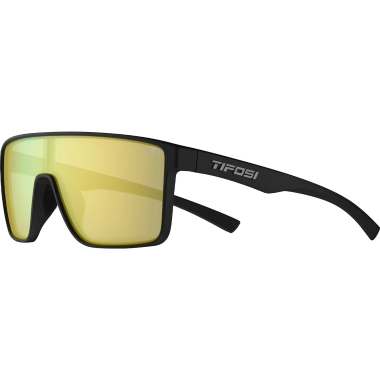
If you’re a shield-style sunglasses aficionado but don’t want to spend a lot of money, the Tifosi Sanctum offers full-coverage protection and reasonable optics in an affordable package. These sunglasses are quite wide, so individuals with a narrower face may find them too large. While some may not be pleased with the re-emergence of this style of sunglasses, there’s no denying they do an exceptional job protecting eyes from wind, moisture, and dust. This high level of protection, combined with the price tag, made these sunglasses stand out to our testers. We also like the wide array of frame colors and lens options so that there’s something for everyone.
The polycarbonate lens is quite good for the cost. No one will argue that it matches the performance of higher-end sunglasses — because it doesn’t — but it will protect your eyes from harmful UV rays. The different lens color options let you choose one that suits the type of light you run in most frequently.
Many of us destroy our sunglasses regularly by dropping them, having them fall off our heads, or because we’re not always the best at carrying a case for them when we’re out and about. If you want to avoid feeling bad about mistreating your sunglasses, getting a pair under $50 can make the sting of scratched lenses or broken frames slightly less painful.
You can read more about these in our full Tifosi Sanctum review.
Shop the Tifosi Sanctum Sunglasses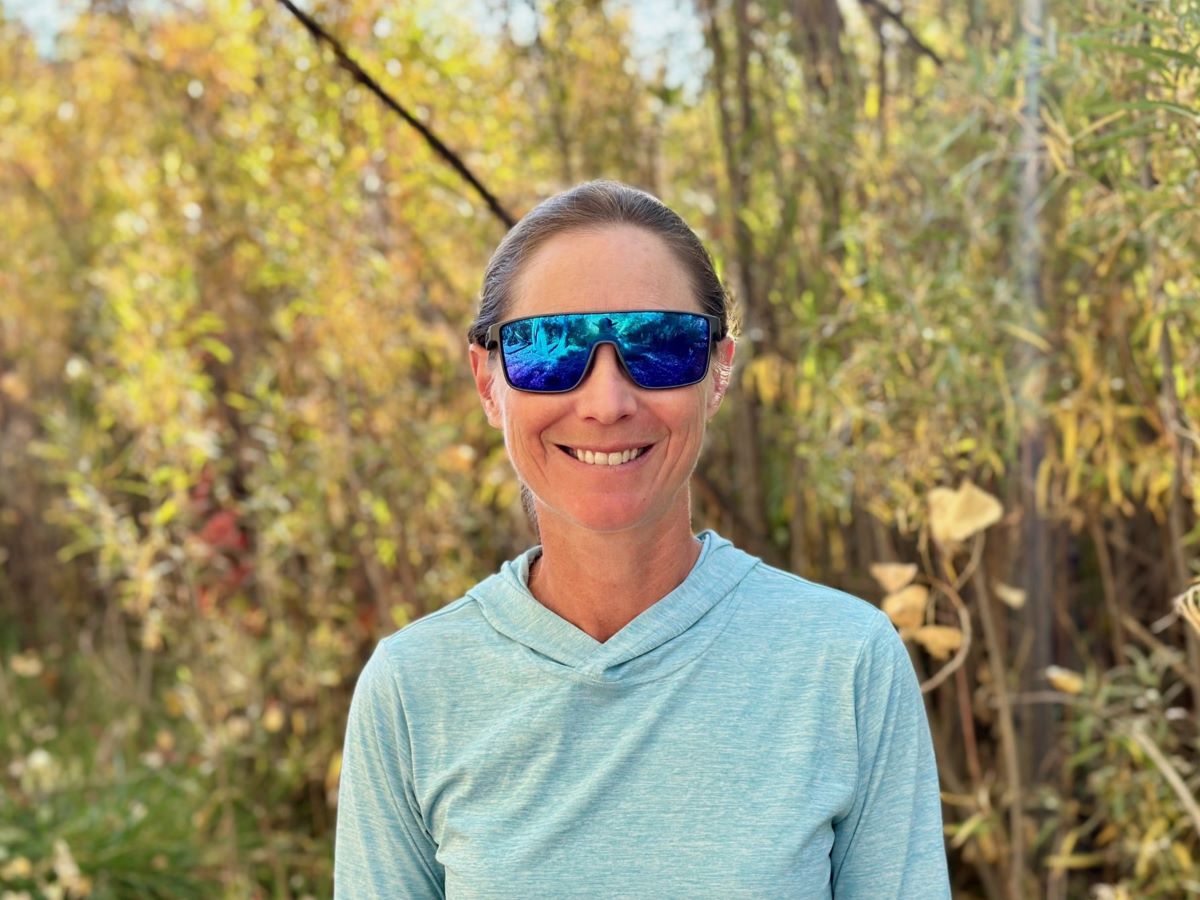
The Tifosi Sanctum are an affordable option for smaller faces. Photo: iRunFar/Kristin Zosel
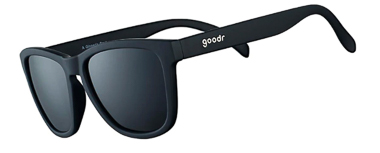
Best Budget Sunglasses — Runner-Up: Goodr OGs ($30)
Pros:
- Low-cost investment
- Reasonable polarized lenses
Cons:
- Polarized coating can wear quickly
- Field of view is limited
- Frame is bigger than average and might be too large for small faces
The very affordable Goodr OGs sunglasses are perhaps the most ubiquitous frame in trail running right now. They are popular worldwide, and people use them in many different climates. The glare-busting polarized lenses provide an excellent optical experience, and the brightly colored frame choices — along with their names — are simply fun. Many will also find this wayfarer style appropriate for daily life.
One component that has made the OGs extremely popular is the silicone nose bridge inserts, which effectively prevent the glasses from slipping during very sweaty or rainy runs. The frame is snug and lightweight, but the field of view is square. This is similar to other value-priced sunglasses. Looking straight ahead is fine, but the lack of lens curvature makes peripheral viewing awkward. The polarized coating can also wear quickly.
We mostly appreciated these glasses for their lack of bouncing and very reasonable price. If you know you’re hard on sunglasses and would rather not worry about them while still having reasonable optics, these are a great choice.
Shop the Goodr OG SunglassesSunglasses Glossary
- Photochromic Lens: This lens type changes its tint in response to varying light conditions, transitioning from clearer in darkness to more strongly tinted in direct sunlight.
- Polarized Lens: Polarized lenses reduce glare from the sun and help minimize reflections from the surface of water and snow. While sunglasses across the price spectrum (from expensive to cheap) may come with polarized lenses, the coatings on lower-end options are significantly less durable. Reputable polarized sports sunglasses also offer ultraviolet protection.
- Standard Lens: These are non-photochromic and non-polarized. Running sunglasses with a standard lens often include multiple lens options you can swap out based on conditions.
- Ultraviolet (UV) Protection: Some lenses have a UV protective coating or are made with a UV protective compound to provide additional protection from solar radiation. All sunglasses offer some UV protection, but higher-end options are more effective.
- Hydrophobic Lenses: These lenses have a coating that helps prevent fogging in the cold and keeps condensation from building up when you sweat.
- Anti-Scratch Lens: While no lenses are entirely scratch-proof, look for sunglasses with a polycarbonate lens.
- Interchangeable Lenses: Brands commonly offer these with sunglasses that don’t have a photochromic lens. These allow you to easily swap in a different lens based on light or weather conditions.

Reflections from snow and water can hurt the eyes and make quality sunglasses even more important. Photo: iRunFar/Eszter Horanyi
How to Choose Running Sunglasses
We acknowledge that sunglasses are a very subjective and personal purchase, and choosing the best running sunglasses isn’t necessarily straightforward. Size, shape, and style preferences differ from person to person. Some people prefer large and loud lenses, such as those found in the Smith Motive, while others opt for a more discreet option that can be worn socially after a run, like the Zeal Boone or the Roka Braker 2.0.
However, aside from appearance, sunglasses have a few objective features that can help you differentiate between them and choose the best ones for you.
Purpose
Ideally, we would have one pair of sunglasses that worked equally well for running and daily life. Unfortunately, the characteristics of the best running sunglasses don’t always align with those needed for driving, socializing at the park, or going on a business trip. Let’s just say we wouldn’t necessarily wear the Rudy Project Propulse with a suit and tie.
Fortunately, some options, like the Knockaround Fast Lanes and the Zeal Boone, offer running-ready lenses with more casual styling. That said, some people don’t mind going to a coffee shop after a run in some of the louder sunglasses we’ve included in this guide, like the Smith Shift Split Mag.
Shape and Style
Trends in running sunglasses have lately returned to the 1980s and 1990s, with loud, shield-like shapes that dwarf even those with bigger faces. Luckily, those who prefer something more standard still have many options with a more subdued shape and profile.
Some sunglasses in this guide are significantly smaller than others and fit those with narrower faces better, like the Method Seven Silverton Trail26 and Roka Braker 2.0. Others have a more general appeal, with colors and shapes to suit all runners, including the Goodr OGs.
The shape of sunglasses also affects their performance. Brands design more technical sunglasses with a focus on performance. The shape of the lenses and frames allows air to pass through, preventing fogging, while minimizing optical distortion in the periphery. We found that the relatively large lenses of the Smith Motive and Smith Shift Split Mag provided a high level of protection and never fogged.
Other sunglasses with a more traditional lens and frame shape may not perform as well in sweaty conditions when running, but they can be more comfortable to wear in social situations before or after a run.

The large lenses of the Smith Motive (back) and Smith Shift Split Mag (front) provide ample coverage. Photo: iRunFar/Eszter Horanyi
Lens Type and Features
There are three main types of lenses found in running sunglasses: standard, photochromic, and polarized. A standard lens is generally darker and provides a high level of protection against ultraviolet light. The sunglasses might come with an additional interchangeable clear lens so that you can choose the right lens for your specific running conditions.
Many sunglasses come with a variety of lens options, and it’s essential to select the lens you want when making a purchase. The Smith Motive comes with two different lenses, allowing you to choose the combination that best suits the environmental conditions you encounter most often.
A photochromic lens, such as the ones on the Smith Shift Split Mag, Julbo Spark, and Tifosi Moab, is the gold standard for running in changing light conditions due to its ability to adapt. While they’re great for those who run from daylight into darkness or from alpine environments into the woods all in one run, they are more expensive than other types of lenses.
A polarized lens, like the one found on the Zeal Boone, reduces glare and enhances the contrast of obstacles on the trail. This can help you see roots, rocks, and variations in the trail more easily. Polarized lenses are available across the price spectrum for sunglasses, but lower-quality polarized lenses are easily damaged and scuffed. The Method Seven Silverton Trail26 comes with partially polarized lenses that we found provided outstanding optics in a variety of light conditions.

iRunFar’s Meghan Hicks wears a pair of Julbo sunglasses while poking at dead things during a fastpacking trip in New Zealand. Photo: iRunFar/Eszter Horanyi
Fit, Adjustability, and Comfort
As with all running gear, comfort is a top priority when choosing sunglasses. Pressure around the head, especially at the ears, or on the bridge of the nose is a common complaint when wearing sunglasses for extended periods. Wearing a hat or headphones that wrap around the back of their ears can make this worse.
You’ll want sunglasses with frames that fit your head well. Sunglasses that are too tight on your head will eventually cause pain, while frames that are too big can flop around on your face when you’re running. The Method Seven Silverton Trail26 has a lightweight and flexible frame, and we never experienced any discomfort wearing them, while the Knockaround Fast Lanes would pinch our heads after several hours on the trail.
If you want a single pair of sunglasses for all your running needs, consider getting a pair with interchangeable lenses. You can swap out the lenses of these frames based on the light conditions. A photochromic lens, like the one on the Julbo Spark or Tifosi Moab, will be your best bet for runs with changing light conditions, such as those that start in daylight but end in darkness. We think photochromatic lenses are fantastic for running, which is why we love the Smith Shift Split Mag, even though they are expensive.
It’s also important to consider how well the sunglasses will stow when not in use. Do they stash easily in your running vest? Will they stay in place when you put them on your head? How do the arms fit with a hat? Our testers found the flexibility of the Rudy Project Propulse helped them stay in place, whether they were wearing them during a hot summer run or had them on over a thick hat. The Method Seven Silverton Trail26 had really flexible arms, which made them comfortable, but they felt less secure when worn on the top of our heads than other sunglasses with more robust frames.
Several of the sunglasses in this guide, including the Julbo Spark and the Knockaround Fast Lanes, don’t come with a hard storage case, making it more difficult to protect them when not in use.

The Method Seven Silverton Trail26 are lightweight, fit small faces, and have excellent options. Photo: iRunFar/Eszter Horanyi
Durability
You won’t find any infomercial-type sunglasses in this guide — you can’t run over these sunglasses with a car or throw them off a cliff and expect them to survive. But all of our choices are reliably durable — they won’t scratch easily or break under normal circumstances. Even the budget Goodr OGs and the Tifosi Sanctum performed well in the durability department.
If you frequently drop your sunglasses or tend to stash them in a pack without a protective case, you might want to buy less expensive ones and replace them when they are damaged.
The most significant difference in durability is with polarized lenses. Less expensive polarized lenses, like those in the Knockaround Fast Lanes, can be easily damaged. More expensive polarized lenses still require protection from abrasion, but with proper care, they should last for a long time.
Cost
Although the best running sunglasses are now more durable and functional than ever, the adage “you get what you pay for” is still relevant. All sunglasses are somewhat fragile, but better lens quality and durability are what you really get for a higher price. While the Smith Shift Split Mag is quite expensive, we believe that their photochromatic lens, lens shape, and overall fit and functionality make them a worthwhile investment if you plan to wear a pair of sunglasses for an extended period.
Goodr is a very popular sunglasses brand, but its polarized lenses don’t hold up over time as well as those of more expensive brands, like Zeal and Smith. If you want the best running sunglasses with polarized lenses that you can count on to last for a long time, it could be worth shelling out for Zeal Boone. But, some runners accept that they often handle their sunglasses roughly and drop them frequently. For these people, a less expensive pair of sunglasses, like the Goodr OGs, could be the way to go.

Maggie Guterl uses a pair of Goodr OGs during a mountain run in the San Juans. Photo: iRunFar/Eszter Horanyi
Running in Unpredictable Light Conditions
For many people, runs occur during the day with relatively stable light conditions. For these situations, having one lens option is fine. Even if it starts to get dark on you on the occasional run, you can put your sunglasses on your head or in a pack while you get home.
But if you run a lot of miles early or late in the day, transitioning from darkness to daylight or daylight to night, it may be worth investing in a pair of sunglasses like the Smith Shift Split Mag with photochromic lenses so that you can keep your eyes protected regardless of the light conditions. We also loved the Julbo Spark, which is ideal for variable light conditions. If you want photochromatic lenses on a budget, consider the Tifosi Moab.
Interchangeable Lenses
Some sunglasses, like the Smith Motive, come with interchangeable lenses, including polarized options. These are not as convenient as photochromatic lenses, which automatically adjust the amount of light they let through, but they can let one set of sunglasses work under various light conditions. The idea is to choose from your multiple lenses to match the specific condition you run in most frequently.
Anti-Fogging Features
To prevent lenses from fogging, it is essential to keep moisture from accumulating on them. Many lenses, including those on the Roka Braker 2.0, have a hydrophobic coating that repels moisture, helping prevent fogging.
Other anti-fogging features on sunglasses include air vents in the frame or lens, like on the Tifosi Moab, as well as specific lens and frame shapes that enhance airflow. We found that the frame shape of the Smith Motive prevented fogging, even under muggy and humid conditions.
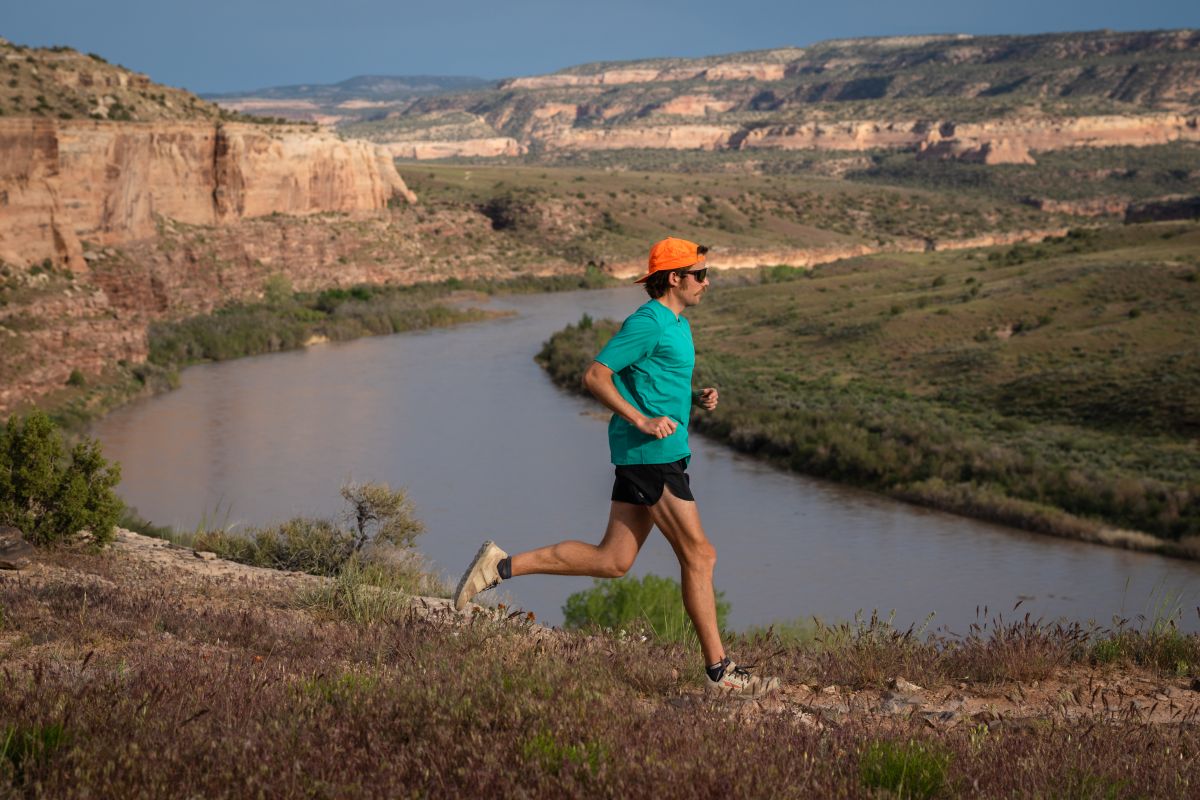
Sunglasses are even more important when running at high altitudes. Photo: iRunFar/Eszter Horanyi
Why You Should Trust Us
There’s a lot to consider when choosing the best running sunglasses out of the seemingly endless options on the market. iRunFar’s gear testing team is based all over the U.S., including the Intermountain West and West Coast, areas that experience over-indexed sunny and gloomy days, respectively. Our team’s sunglasses preferences range from high-performance photochromic lenses to budget options, as well as varying frame sizes and shapes to accommodate faces of different sizes.
We selected some sunglasses designed purely for performance, as well as others that performed well but were deemed stylistically acceptable for wearing to the coffee shop or grocery store after a run. Our team also tested a variety of glasses with photochromic lenses for changing light conditions. Another important consideration was cost, and to that end, the team extensively tested budget options because we understand that not everyone wants to spend $200 or more on a pair of sunglasses.
We started the initial version of this guide by polling the many members of the iRunFar team about their favorite sunglasses for different conditions. We also researched the market for options from both popular running brands and other lesser-known companies. We’ve tested many of the best running sunglasses in this guide for over a year, and in some cases, for many years.
We run in our sunglasses in various conditions, from short overcast runs to long days in the alpine. Our testers frequently go on extended above-treeline romps through the Colorado mountains, where UV protection for the eyes is paramount. We wore the sunglasses included in this guide for hundreds of miles to gain a thorough understanding of their performance and durability.
We evaluate sunglasses based on various factors, from lens performance to frame style. Some of our testers are admittedly hard on their sunglasses and put them through proper durability testing to see how easily the lenses scratch or frames break. We also considered weight, fit, and the ability to stay perched on a hat or head when not in use while evaluating sunglasses for this guide.
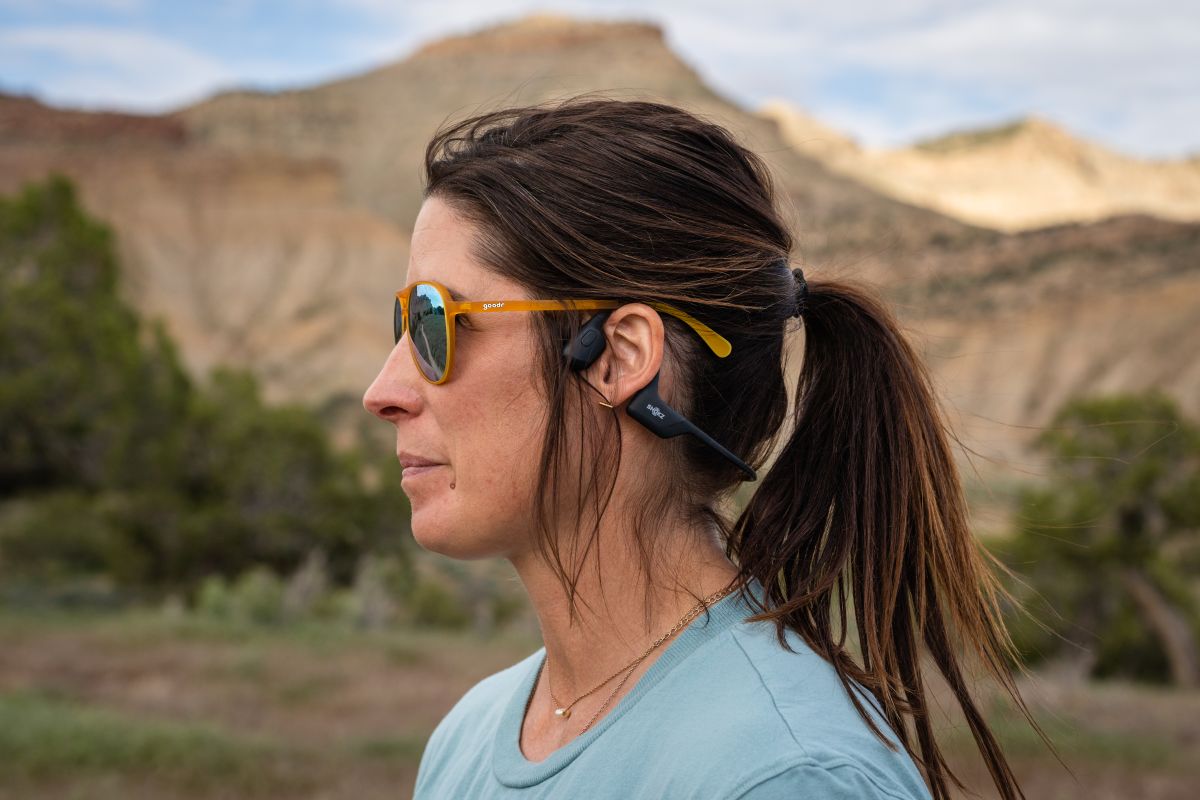
We tested sunglasses on top of headphones to make sure they’re comfortable. Photo: iRunFar/Eszter Horanyi
We tested these glasses across multiple sports outside of running, including skiing, cycling, packrafting, and fishing. We also attempted fastest known times in some of these glasses, starting in the dark, going through the day, and finishing under the stars, and made sure we took sunglasses out in cold, wind, heat, humidity, low light, and bright light.
We included some very expensive sunglasses because they may offer more durability, higher performance, and better warranty coverage. We gave as much priority to budget options, which we defined as $50 or less, as we did to expensive options. We found high performers across both ends of the spectrum, so it’s a great time to be a sunglasses consumer.
At iRunFar, we’re continually testing new sunglasses to update this guide as new options become available.
Frequently Asked Questions About Running Sunglasses
Why is it important to wear sunglasses?
Sunglasses protect your eyes from ultraviolet A and B (UVA and UVB) rays, help reduce eye fatigue, and improve clarity when running across terrain with different surfaces and flat light — scenarios we find in the mountains, forests, and on the coast. Even budget sunglasses like the Tifosi Sanctum can provide nearly 100% protection from harmful UVA and UVB rays.
Sunglasses also physically protect the eyes from tree branches and other hazards. An errant branch to the eye can end a run prematurely and, in some cases, permanently damage eyesight. Wearing clear lenses at night may seem overkill, but they can save you from injury. Sunglasses with a photochromatic lens, like the Smith Shift Split Mag that transition to clear, make it easy to run at night with eye protection.
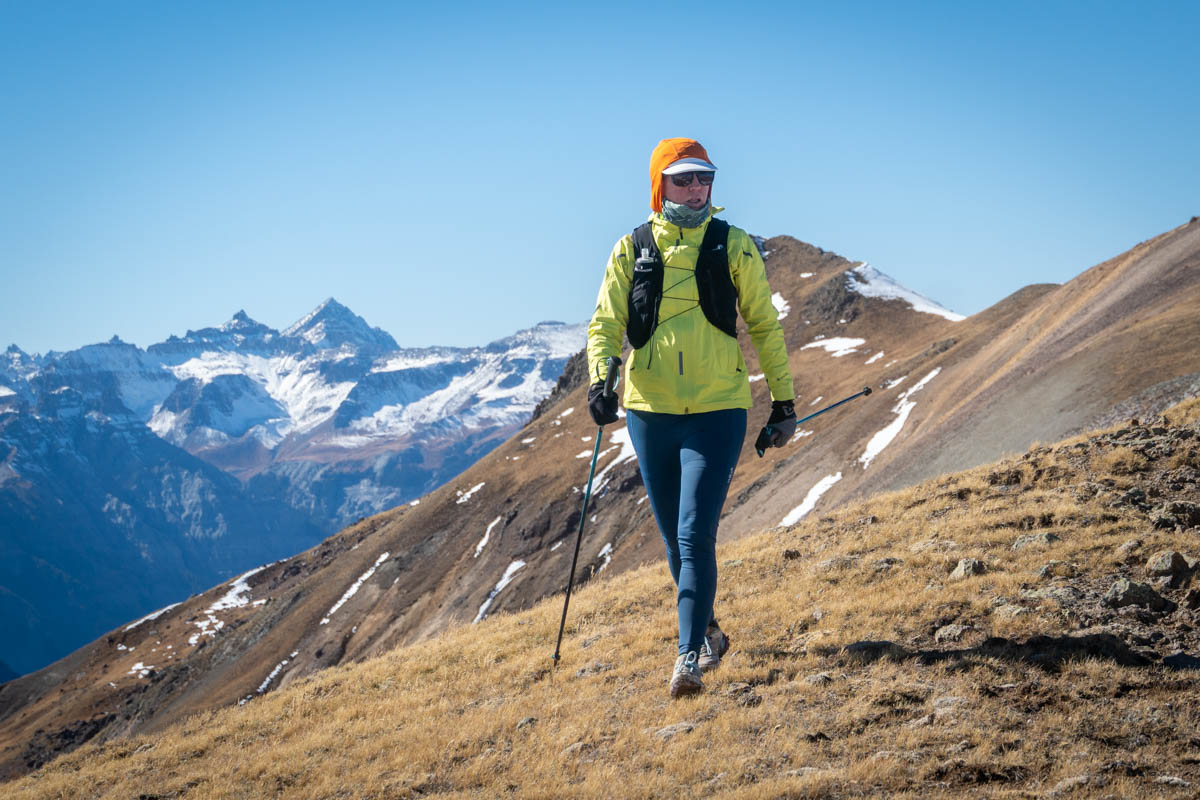
Sunglasses are especially important in alpine environments with a high UV index. Photo: iRunFar/Eszter Horanyi
How do sunglasses protect my eyes?
Sunglasses keep ultraviolet rays from penetrating your eyes and serve as a protective equivalent to sunscreen. As a literal barrier, sunglasses protect your eyes from wind, dust, sand, branches, and other debris that could scratch your corneas or, very literally, poke your eyes out. Sunglasses with a large lens provide a high level of protection.
Wearing clear lenses at night can also provide a barrier against unseen branches, bugs, and more. The photochromatic Rudy Project Propulse will go clear in the dark, allowing you to see while still protecting your eyes from branches.
What is a polarized lens, and is it better for running?
A polarized lens, like that found on the Roka Braker 2.0, is excellent for any sport that requires terrain distinctions because it increases contrast and helps you pick out differences in trail surfaces. Running sunglasses can also act as your sunglasses for other sports, and a polarized lens will be handy for water-based activities like fishing and boating, as well as snow sports.
Polarized lenses make it easier to see into bodies of water, and many people like how the world looks through them. Our testers loved the performance of the Zeal Boone sunglasses and found that the increased contrast they provided made it easier to pick out trail features. The Method Seven Silverton Trail26 has partially polarized lenses that excelled in lower-light conditions.
What is a photochromatic lens, and why is it suitable for running?
Photochromic sunglasses are particularly well-suited for trail running and all-day, all-night outings because they adjust their tint based on ambient light. When you’re out in the sun and the lens is exposed to UVA and UVB rays, a chemical reaction occurs to darken the lens surface. When the light decreases, the coloring fades to clear.
Sunglasses with a photochromatic lens — like the Smith Shift Split Mag and the Rudy Project Propulse — allow you to use one lens no matter what time of day or night you’re running. They take the hassle out of switching between dark and clear lenses, allowing you to keep your eyes protected if your run has gone longer than intended and you find yourself out in the dark. While most photochromatic options are on the pricier side, the Tifosi Moab has a reasonable price tag.

Investing in high-quality sunglasses can ensure your eyes are protected from harmful UV rays.
Should I wear running sunglasses even when it’s not sunny out?
The primary function of a pair of running sunglasses, of course, is to protect your eyes from the sun on those long, bright days outside by providing a barrier between your eyes and the sun’s UVA and UVB rays. They can also reduce eye fatigue by minimizing squinting when the sun is out.
You can also wear a good pair of running sunglasses in the dark to protect your eyes from branches, debris, and anything else the trail might throw in your way, as well as from extremely cold or dry air. A photochromatic pair of sunglasses, like the Rudy Project Propulse, will adjust their level of tint based on the ambient light, allowing you to see clearly and keep your eyes protected when the sun goes down. Other options, like the Smith Motive, come with interchangeable lenses, so you can manually change lenses based on the type of light outside.
How long will my running sunglasses last?
In many ways, you get what you pay for when it comes to running sunglasses. While less expensive glasses will perform well and look good, the implicit agreement is that they won’t endure much abuse, and the lens quality may deteriorate quickly. Many of us will be okay with spending $25 on sunglasses like the Goodr OGs, knowing it’s not a big deal if we damage or lose them.
If you’re looking for the best running sunglasses, though, you’ll need to pay more. A more expensive pair of sunglasses, such as the Method Seven Silverton Trail26 or Smith Shift Split Mag, will be much more comfortable, and the lens will let you see more detail. Perhaps you’ll even be more inclined to care for your sunglasses better when you know how much money you’ve invested in them!
How do I prevent scratches on my sunglasses?
Dropping your sunglasses in dirt, mud, or on rocks can damage the lens, and these impacts are just part of trail running for many people, but there are steps you can take to protect your sunglasses otherwise. Using a lens-specific cleaning cloth is one way to keep your sunglasses scratch-free. There’s a good chance one comes with whatever sunglasses you purchase.
When they are covered with dirt, mud, or sweat, wash your sunglasses’ frames and lenses with mild soap and water, and you can dry them with a sunglass- or eyeglass-specific lens cloth. A higher-quality lens in a more expensive pair of sunglasses, such as the Smith Motive, will be more scratch-resistant than a lower-quality lens. Inexpensive polarized lenses are particularly prone to abrasion damage. The Smith Shift Split Mag lens features a grime-resistant coating that helps keep it cleaner for longer.

Taking care of your running sunglasses is important to improve their longevity. Photo: iRunFar/Eszter Horanyi
How do I stop my sunglasses from fogging up when I run?
When choosing your sunglasses, look for two key features: a hydrophobic lens coating and a frame with cutouts that allow air to flow between your face and the glasses. Most high-end sunglasses feature an excellent hydrophobic coating that prevents them from fogging. This is especially important for people who sweat a lot or who are moving more slowly in humid or very cold environments.
Our testers appreciated the breathability of the Smith Motive and reported no issues with lens fogging. The Smith Shift Split Mag has an anti-moisture coating that helps the lenses resist fogging.
I always lose, drop, or damage my sunglasses — help! How do I store my sunglasses when I’m not wearing them to prevent them from getting lost or damaged?
It’s best to treat your sunglasses like you would your puppy: Don’t leave them in the car on a hot, sunny day; clean them gently with mild soap and water; and provide them with protection from the elements. Most sunglasses come with at least a soft pouch and, at best, a hard case. Use them! It’s an excellent policy to always travel with a hard case and keep it in your car to stash your glasses safely before and after a run.
Only clean your glasses with the soft case, or, when really dirty, with a gentle solution of water and soap. Avoid cleaning your sunglasses with your shirt when you’re out on a run.
If you frequently drop sunglasses or can’t be bothered to put them in a case when not in use, buying budget sunglasses like the Knockaround Fast Lanes or the Goodr OGs could be a good idea. That way, when your sunglasses get damaged, replacing them doesn’t cost much. For some of us, the best running sunglasses are those we don’t care about.

With many sunglasses coming in different colorways, you can even match them to your running kit! Photo: iRunFar/Eszter Horanyi
Why are running sunglasses so expensive?
As with all technical running gear, research into creating a high-quality pair of technical glasses results in a high price point. Fortunately, several brands have emerged recently offering low-priced sunglasses specifically for runners.
You might sacrifice some of the durability and performance of more expensive sunglasses like the Julbo Spark, but lower-cost sunglasses like the Knockaround Fast Lanes or the Tifosi Sanctum will undoubtedly meet most runners’ needs. When it comes to versatile sunglasses — those you can use for running as well as skiing, cycling, or traveling — sometimes paying more really is worth it.
Can I use the same sunglasses for different sports?
Most sunglasses on our list will perform well for many types of athletic endeavors. The key to multi-use sunglasses is to find a pair that is both breathable and hydrophobic, so they don’t fog up on your face.
Different sports may need different levels of coverage. We regularly used the Smith Motive sunglasses for cycling, skiing, and running, and found that they provided sufficient coverage for a variety of situations.
Call for Comments
- It’s time for you to weigh in! What are your favorite running sunglasses?
- What conditions do your running sunglasses perform best in?
- Do you wear running sunglasses for activities other than running?
Back to Our Top Running Sunglasses Picks

iRunFar’s Bryon Powell testing Knockaround sunglasses. Photo: iRunFar/Meghan Hicks